

Table of Contents
You have been staring at the front of your house, noticing the wear and tear, and wondering if it is time for a major change. Figuring out exactly when to replace siding is a critical first step in protecting your home from moisture damage, dry rot, and drafts. But once you commit to stripping away the old exterior, you are faced with an exciting, yet somewhat overwhelming design choice. You don’t just have to pick a material or a color; you have to choose a direction.
The primary debate in exterior renovations usually comes down to orientation: horizontal siding vs vertical siding. Which one is better for your home? Does one last longer? Is one significantly cheaper to install?
As professional exterior contractors, we hear these questions every single day. The choice you make will completely alter the architectural profile of your home, transforming it from a standard suburban build into a modern farmhouse, a rustic retreat, or a contemporary masterpiece.
In this comprehensive guide, we are going to break down everything you need to know about the vertical vs horizontal siding debate. We will explore the installation differences, the hidden costs, the maintenance realities, and the massive trend of mixing both styles to create stunning curb appeal. Let’s dive in.
The Classic Standard: Horizontal Siding
When you close your eyes and picture a classic American house, you almost certainly picture horizontal siding.
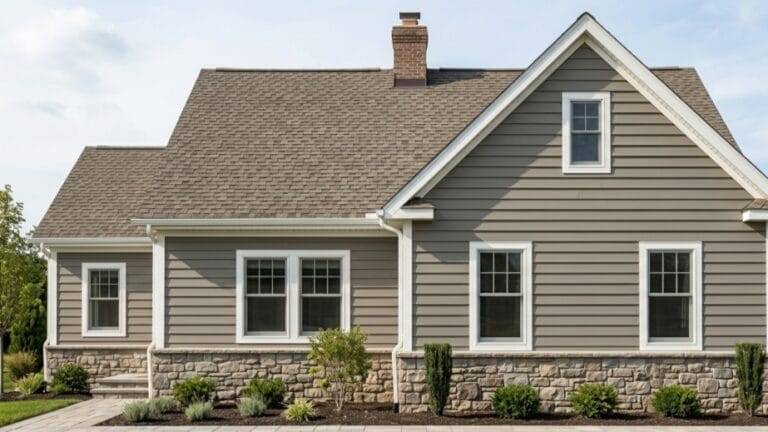
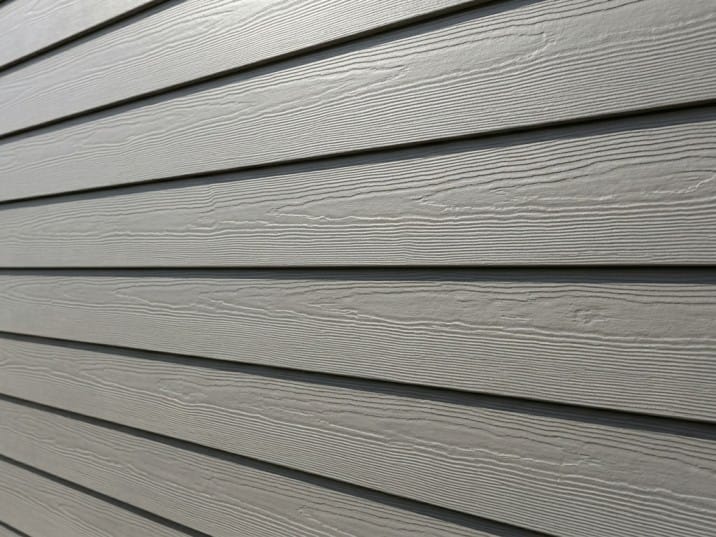
Also known as lap siding or clapboard, this is the traditional profile where long boards are installed horizontally across the wall, with each board slightly overlapping the one beneath it. It has been the default choice for residential construction for hundreds of years.
Why Do We Love Horizontal Siding on House Exteriors?
There is a reason horizontal siding has dominated the market for so long. It is familiar, it feels welcoming, and it is incredibly practical.
- Timeless Appeal: It fits perfectly on almost any traditional architectural style, from Cape Cods and Craftsman bungalows to standard Ranch-style homes. It provides a clean, grounded look.
- Easy Installation: From a contractor’s perspective, horizontal boards are fast and straightforward to install. They are nailed directly into the vertical wall studs of your home.
- Cost-Effective: Because it is so quick to install and requires no specialized underlying grid system, the labor costs are generally lower.
The Drawbacks of Horizontal Profiles
While it is the industry standard, it isn’t perfect. The overlapping nature of the boards means there is a small lip at the bottom of every single plank.
- Water Vulnerability: In severe, driving rainstorms, water can sometimes find its way up and under those horizontal laps if the siding isn’t perfectly installed.
- Cleaning Challenges: That same horizontal lip catches dust, pollen, and dirt. If you live near a busy road or in a dusty environment, you will find yourself needing to pressure wash those little horizontal shelves more often. If you are upgrading from outdated, swelling hardboard siding, you already know how damaging trapped water and dirt can be to a horizontal lap system.
Vertical Siding: A More Modern Outlook
If horizontal is the classic standard, vertical is the bold, architectural statement.
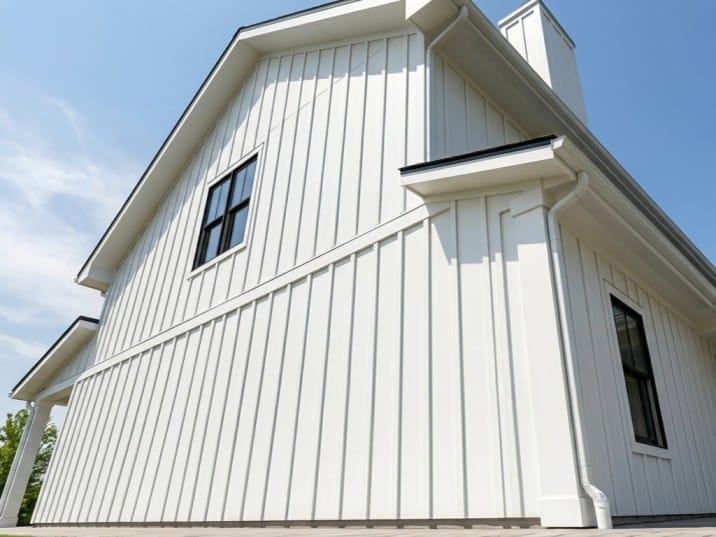
When homeowners search for siding vertical vs horizontal options, they are usually drawn to a style known as “Board and Batten.” This involves wide vertical boards separated by thin vertical strips (the battens) that cover the seams. It is the driving force behind the massive “Modern Farmhouse” trend.
However, board and batten isn’t the only vertical option. You can also find sleek, grooved vertical panels. If you are dealing with a rotting exterior and replacing old 1970s T1-11 siding, you are already familiar with a vertical panel look, but modern fiber-cement or vinyl upgrades offer vastly superior water protection.
The Advantages of Going Vertical
Choosing vertical or horizontal siding is often an emotional design choice, but vertical has some distinct physical advantages.
- The Illusion of Height: Vertical lines draw the eye upward. If you have a single-story home or a low-pitched roof, vertical lines can make your house look significantly taller and more imposing.
- Easier to Clean: Gravity is your friend here. Because the boards run up and down, water naturally sheets right off them. There are no horizontal lips to catch dust, making it much easier to keep clean.
- Stand Out Curb Appeal: It is unique. In a neighborhood where 90% of the homes have horizontal lap, a crisp vertical exterior instantly sets your property apart and raises its perceived value.
Siding Costs
Let’s talk numbers, because the budget is usually the deciding factor in any home renovation. The most common question we get when consulting on a project is: is vertical siding more expensive?
The short answer is yes. But you need to understand why.
When evaluating vertical siding vs horizontal siding cost, the materials themselves (the vinyl, wood, or fiber cement) are often priced very similarly. The price hike comes entirely from the labor and the structural preparation required beneath the surface.
The Hidden Cost of the Furring Grid
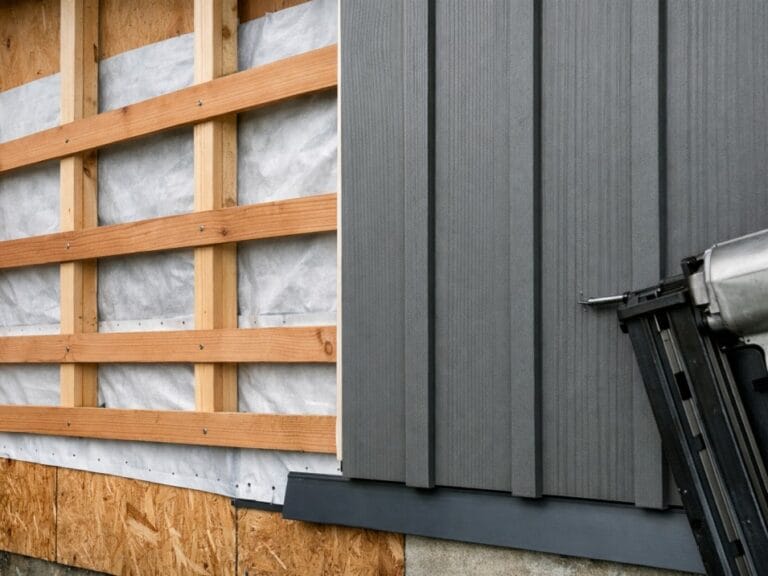
Your home is built with vertical wooden studs holding up the walls. If you install horizontal boards, you simply nail them horizontally across those vertical studs. They intersect perfectly. But if you want to install vertical boards, you can’t nail them into vertical studs, they run parallel to each other.
To fix this, contractors have to install a “furring strip” system. We must attach horizontal wood strips across your entire house before we can hang the vertical panels. This adds extra material costs and significantly more labor time.
So, in the battle of vertical siding vs horizontal, horizontal wins the budget category easily. If you are weighing a massive luxury upgrade, you might also compare stucco vs siding to see where your money is best spent, but within the siding family, vertical will always carry a slight premium for the installation complexity.
Mixing Orientations
What if you don’t want to choose? What if you want the classic feel of horizontal but the striking modern look of vertical?
You are in luck. The biggest trend in exterior design for 2026 is combining them. Having vertical and horizontal siding on a house is the ultimate way to add architectural depth, texture, and custom luxury to your property.
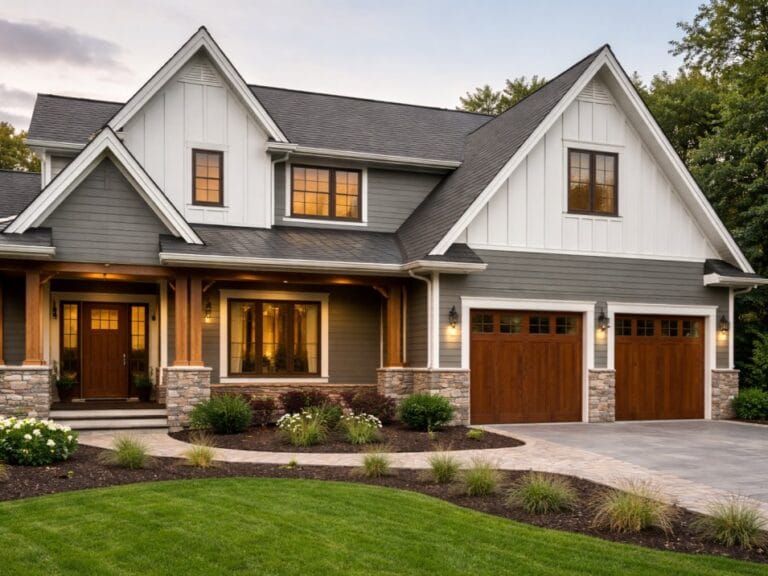
How to Design Houses with Vertical and Horizontal Siding
Mixing profiles requires a thoughtful eye. If you just slap them together randomly, the house will look chaotic. Here are the most effective ways we design horizontal and vertical siding on house exteriors:
- The Gable Accent: This is the most popular method. We install traditional horizontal siding on the main body of the house (the first and second floors). Then, in the triangular peaks of the roofline (the gables), we switch to vertical board-and-batten. It draws the eye all the way to the top of the roof, making the house look stately.
- The Architectural Bump-Out: Many modern homes have sections that jut out, like a bump-out window, an attached garage face, or a distinct entryway. Putting vertical siding on these bump-outs while the rest of the house remains horizontal creates a beautiful, contrasting focal point.
- The Base and Top Method: Some designers love to flip the script, using horizontal vs vertical siding to divide the floors. They might use horizontal lap on the bottom floor to ground the house, and vertical on the top floor to give it lift.
When you look at vertical and horizontal siding combinations, it breaks up the monotony of large, flat walls. It gives a standard suburban home the feeling of a custom-built architectural masterpiece.
Adding Materials to the Mix
The concept of mixing isn’t limited just to the direction of the boards. You can also mix entirely different materials to achieve incredible curb appeal.
For instance, many homeowners choose to replace siding with brick or natural stone veneer on the lower three feet of the house (a wainscot). Above that brick ledge, they might transition into crisp vertical board-and-batten siding. The heavy masonry grounds the house, while the vertical lines pull the eye upward.
Color choices also play a massive role in the vertical siding vs horizontal siding debate. If you are leaning into bold, modern trends, you might be considering a dark exterior. Houses with black siding are incredibly striking, but dark colors show dirt more easily. Because vertical boards shed water and dust better than horizontal lap boards, going vertical might actually be the smarter, lower-maintenance choice if you are committed to a moody, dark color palette.
The Logistics of Your Remodel
Whether you choose the classic horizontal look, the modern vertical aesthetic, or a stunning combination of both, stripping your home and starting fresh is a major structural project.
Before you start tearing off your old exterior, you have to handle the red tape. You might be wondering if you need a permit for siding replacement. In almost every municipality, the answer is an absolute yes. Siding is the primary weatherproofing layer of your home. The city building inspector needs to verify that the moisture barrier (house wrap) and the window flashing are installed correctly behind your new exterior to prevent mold and dry rot.
Furthermore, if you are opting for the more complex vertical installation, you need a team that understands how to properly build the underlying furring grid without trapping moisture against your walls. Knowing exactly what questions to ask a siding contractor during the hiring process, like asking about their specific experience with vertical structural grids and Z-flashing, will save you thousands of dollars in water damage down the road.
The Bottom Line
So, who wins the great horizontal vs vertical siding debate?
Ultimately, there is no wrong answer. It comes down to your personal aesthetic, the architecture of your home, and your renovation budget.
- Choose Horizontal if: You love classic, timeless American architecture, you are working with a slightly tighter budget, and you want an exterior that will appeal to the widest possible range of future home buyers.
- Choose Vertical if: You want to make a bold, modern statement, you want to make a single-story home look taller, and you are willing to pay a slight premium for the added labor and unique curb appeal.
- Choose Both if: You want the ultimate custom look. Combining horizontal and vertical siding is the absolute best way to add texture, highlight architectural features, and give your home a high-end, designer finish.
Your home’s exterior is its first impression on the world, and it is the armor that protects your family from the elements. Don’t settle for an exterior that you don’t absolutely love.
Ready to transform your home’s curb appeal? Whether you want traditional lap, modern board-and-batten, or a custom mix of both, you need a team that executes the vision flawlessly. Contact Sidex, your premier siding and deck contractors, for a completely free, honest consultation today. Let’s design an exterior that makes you proud every single time you pull into the driveway.