

Table of Contents
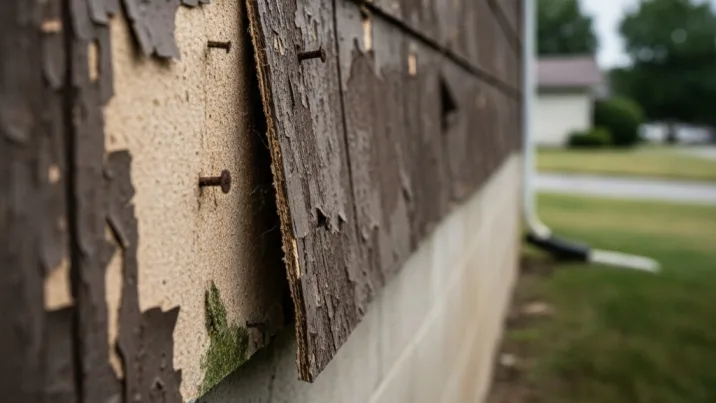
You bought a charming home with what looked like classic wood siding. It had the grain, the texture, and the warmth you wanted. But a few years later, you noticed something alarming. The bottom edges of the boards looked swollen, almost fluffy. A few nails had popped out. And when you pressed your thumb against a wet spot after a storm, it felt surprisingly soft, like damp cardboard.
If this sounds familiar, you are likely dealing with hardboard siding.
Often called “Masonite” or “pressboard,” this material was the darling of the construction industry from the 1980s to the mid-1990s. It promised the look of wood for a fraction of the price. But for thousands of homeowners, that promise turned into a maintenance nightmare of rot, swelling, and water intrusion.
If you are currently evaluating when to replace siding to protect your home’s structural integrity, identifying whether you have hardboard is a critical first step. This guide will walk you through exactly what hardboard siding is, why it fails, and what you can do about it.
What Is Hardboard Siding?
To understand why this material fails, you have to understand how it was made.
Hardboard wood siding is essentially an engineered wood product. Manufacturers took wood chips and fibers, often leftovers from lumber mills, and compressed them under extreme heat and pressure using wax and resin binders. The result was a dense, heavy board that could be stamped with realistic wood grain textures.
In the industry, it goes by many names. You might hear contractors refer to it as pressed board siding, presswood siding, or by specific brand names like Masonite (the most famous manufacturer).
The Appeal of Hardboard Exterior Siding
Why was it installed on millions of homes?
- Cost: It was significantly cheaper than real cedar or redwood.
- Uniformity: Unlike real wood, hardboard lap siding didn’t have knots or warping issues upon installation.
- Versatility: It came in various styles, including hardboard panel siding (large 4×8 sheets) and horizontal lap boards.
However, while it looked like wood, it lacked wood’s natural defenses. Real wood has a cellular structure designed to transport water. Press board siding is simply glued-together fiber. Once that glue fails, the board reverts to its natural state: sawdust.
The "Sponge Effect"
The fundamental flaw of hardboard siding panels is moisture absorption.
Think of hardboard siding like a very dense stack of paper. As long as the factory seal and paint remain perfect, it performs reasonably well. But the moment that seal is broken, by a nail hole, a scratch from a tree branch, or settling of the house, water finds a way in.
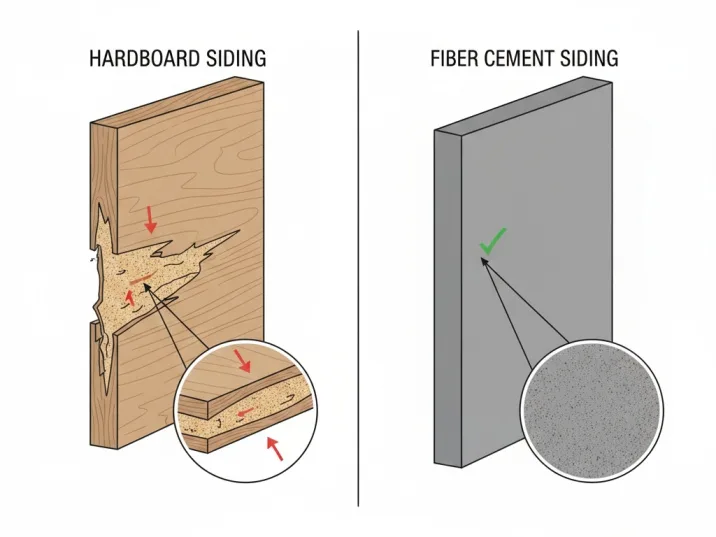
Once water penetrates the core, the fibers swell. Unlike real wood, which expands and contracts, pressboard siding swells and stays swollen. It does not shrink back down when it dries. This permanent swelling breaks the bond of the paint, leading to cracking and peeling, which lets in more water. It is a vicious cycle that eventually turns your exterior cladding into a soggy sponge held onto your house by rusty nails.
How to Identify Hardboard Siding
You might be asking what a hardboard looks like compared to real wood or fiber cement. Since it was designed to mimic these materials, it can be tricky to spot from the curb. However, up close, the signs are unmistakable.
1. The "Fuzzy" Edge Test
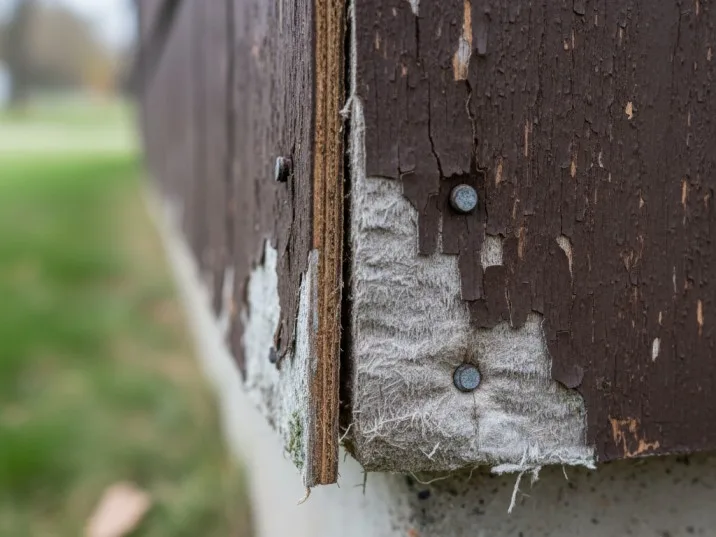
Go to a spot on your house where the siding meets the foundation or a trim board. Run your finger along the bottom drip edge of the siding. Real wood will feel solid or splintery. Hardboard siding that is beginning to fail will feel soft, fuzzy, or swollen.
2. The Check-Mark Pattern
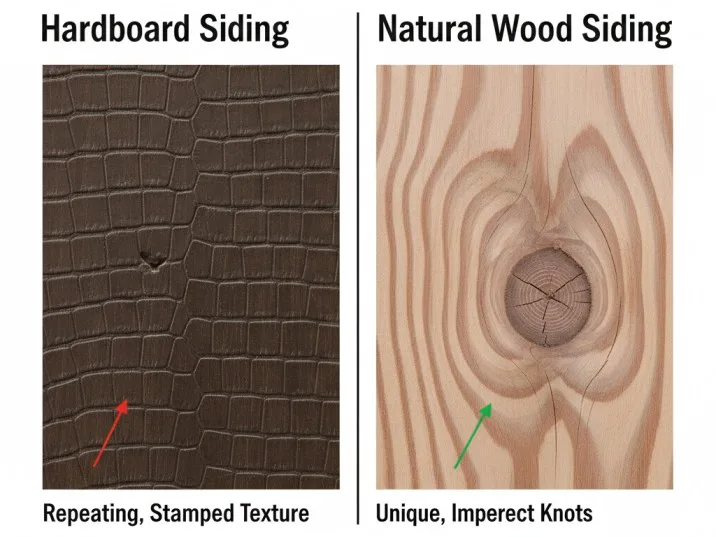
Look at the surface of the boards. Do you see small, crescent-shaped patterns? This is often a tell-tale sign of the artificial texture stamped into hardboard exterior siding.
3. The AHA Code
If you have access to an unfinished area, like an attic or the backside of a garage wall where the siding is exposed, look for markings. Manufacturers often stamped an “AHA” (American Hardboard Association) code on the back. Seeing “AHA” followed by a number is the definitive confirmation of hardboard on your home.
4. No Knots
Real wood has imperfections. Hardboard wood siding is perfectly imperfect. If every board has the exact same “grain” pattern repeating every few feet, it is a manufactured product.
Why Does Hardboard Fail? (The Warning Signs)
If you have a siding hardboard on your home, you need to be vigilant. The failure of this material isn’t just cosmetic; it can lead to serious structural damage.
1. Delamination
This is the most common issue. The layers of the compressed board begin to separate. It looks like the face of the board is peeling away from the core. This usually happens at the bottom drip edge first.
2. Mushrooming at Nails
As the hard board siding swells, it pushes against the nail heads. Eventually, the siding swells around the nail, creating a sunken appearance, or the nail pops out entirely. This leaves the siding loose and allows wind-driven rain to get behind it.
3. Buckling and Wavy Walls
Because presswood siding expands significantly when wet, boards that were installed too close together (without a gap for expansion) will buckle off the wall. If your wall looks wavy when you look down the side of it, moisture is likely trapping itself behind the panels.
4. Mold and Mildew
Because the material holds water, it becomes a breeding ground for biological growth. If you see persistent black or green spots that return immediately after washing, the moisture is likely deep inside the board, not just on the surface.
The "Masonite" Lawsuit Era
You can’t talk about hardboard siding without mentioning the lawsuits. In the 1990s, a massive class-action lawsuit was brought against Masonite Corporation and other manufacturers. Homeowners alleged that the siding was defective, rotting prematurely even when properly maintained.
The courts agreed, leading to over a billion dollars in settlements. While the deadline to file claims for those original lawsuits has long passed (mostly ending in the late 2000s), the legacy remains. If your home still has original 1990s hardboard lap siding, it is likely living on borrowed time.
Can You Repair Hardboard Siding?
This is the million-dollar question. If you have a few rotten boards, can you just swap them out?
Technically, yes. But there are significant challenges.
1. Sourcing Material
True hardboard siding panels are becoming increasingly difficult to find because most reputable supply houses stopped stocking them years ago due to liability issues. You may find “match-up” products made of fiber cement that mimic the look, but they will have a different thickness, making the patch obvious.
2. The "Band-Aid" Problem
If one section of your siding has rotted, it is highly likely that the rest is not far behind. Pressed board siding tends to fail uniformly. Patching one area often leads to a game of “whack-a-mole” where you are chasing leaks around the house every season.
3. Painting Issues
Because old hardboard siding is often water-logged, it holds moisture. If you try to repaint it to seal it up, the moisture trapped inside will heat up in the sun and blister the new paint within months.
Our Expert Advice: Minor damage (like a single hole from a baseball) can be patched with automotive body filler (Bondo) and painted. But widespread swelling or delamination cannot be reversed. Once the fibers have swelled, they will never shrink back.
Maintenance: Extending the Life of What You Have
If you aren’t ready to replace your hardboard exterior siding yet, you must be aggressive about maintenance to keep it watertight.
- Caulk is King: Inspect every butt joint (where two boards meet) and every corner. Hardboard siding shrinks in length over time, opening up gaps. Fill these with a high-quality polyurethane caulk.
- Keep Sprinklers Away: This is the #1 killer of hardboard. If a lawn sprinkler hits your house every morning, that section of siding will rot within a year. Adjust your heads immediately.
- Maintain Gutter Distance: ensure your roof kick-out flashing diverts water into gutters and not down the face of the siding.
- Paint Frequently: Don’t wait for peeling. A fresh coat of high-quality acrylic latex paint acts as the primary seal. You may need to paint hardboard every 5-7 years, compared to 10-15 years for modern materials.
Replacement Options: Moving Beyond Pressboard
When the time comes to remove the press board siding, what should you replace it with? Many homeowners weigh the pros and cons of stucco vs siding for better fire resistance. Others look for a complete aesthetic overhaul and choose to replace siding with brick or stone veneer on the home’s facade for added durability.
1. Fiber Cement (James Hardie)
This is the most common upgrade from hardboard. It mimics the look of wood grain perfectly but is made of cement, sand, and cellulose fibers. It is virtually rot-proof, fire-resistant, and impervious to termites.
2. Engineered Wood (LP SmartSide)
Wait, isn’t this hardboard all over again? Not quite. Modern engineered wood uses advanced zinc borate treatments and water-resistant waxes that make it vastly superior to the “cardboard” siding of the 90s. It offers the durability of wood without the swelling issues of old pressboard siding.
3. Vinyl Siding
Modern insulated vinyl can provide the rigidity of wood without the maintenance. It’s even available in dark, bold colors that are trending right now, making it a popular choice for houses with black siding and white trim.
The Bottom Line
What is hardboard siding? In 2026, it is mostly a liability.
While it served its purpose as a budget-friendly option decades ago, the reality is that hardboard siding was never built for the long haul. If your home is wrapped in this material, you are sitting on a ticking clock. The question isn’t if it will leak, but when.
Ignoring swollen hardboard wood siding can lead to much more expensive problems, including rotted framing, mold in your insulation, and termite infestations.
Don’t wait for the wall to rot. If you suspect you have failing hardboard, let us take a look. Contact Sidex today for a free inspection, your trusted siding repair contractors in Northern California. We can help you transition from the maintenance headaches of the past to a durable, beautiful future.