

Table of Contents
If you are actively researching the best siding for a house, you have likely noticed a massive shift at your local lumber yard. Contractors are moving away from high-maintenance timber and brittle plastics, steering clients instead toward advanced hybrid building materials. At the center of this architectural shift is composite siding.
However, “composite” is a surprisingly broad umbrella term thrown around by sales reps. To know exactly what you are putting on your walls, you need to understand the distinct types of composite siding dominating the market today. Let’s bypass the confusing showroom jargon, define how these boards are made, and hyperfocus on the specific composite siding options available for your remodel.
What is Composite Siding?
Before evaluating specific brands, let’s answer the foundational question: what is composite siding?
In simple terms, composite siding – also known as composition or synthetic siding – is engineered cladding made by combining two or more distinct raw materials. The objective is straightforward: take the visual warmth of organic timber and fuse it with the extreme structural stability of modern polymers, waxes, and cements.
Unlike standard builder-grade plastics that can turn brittle during sub-zero winter snaps, high-quality composite siding materials are incredibly dense. They create a fortified, moisture-resistant envelope around your wall studs. Whether you are drafting plans for a brand-new composite house or updating a tired 1970s split-level, these manufactured boards deliver an elite level of protection that practically eliminates wood rot, cupping, and insect damage.
The 4 Core Types of Composite Siding
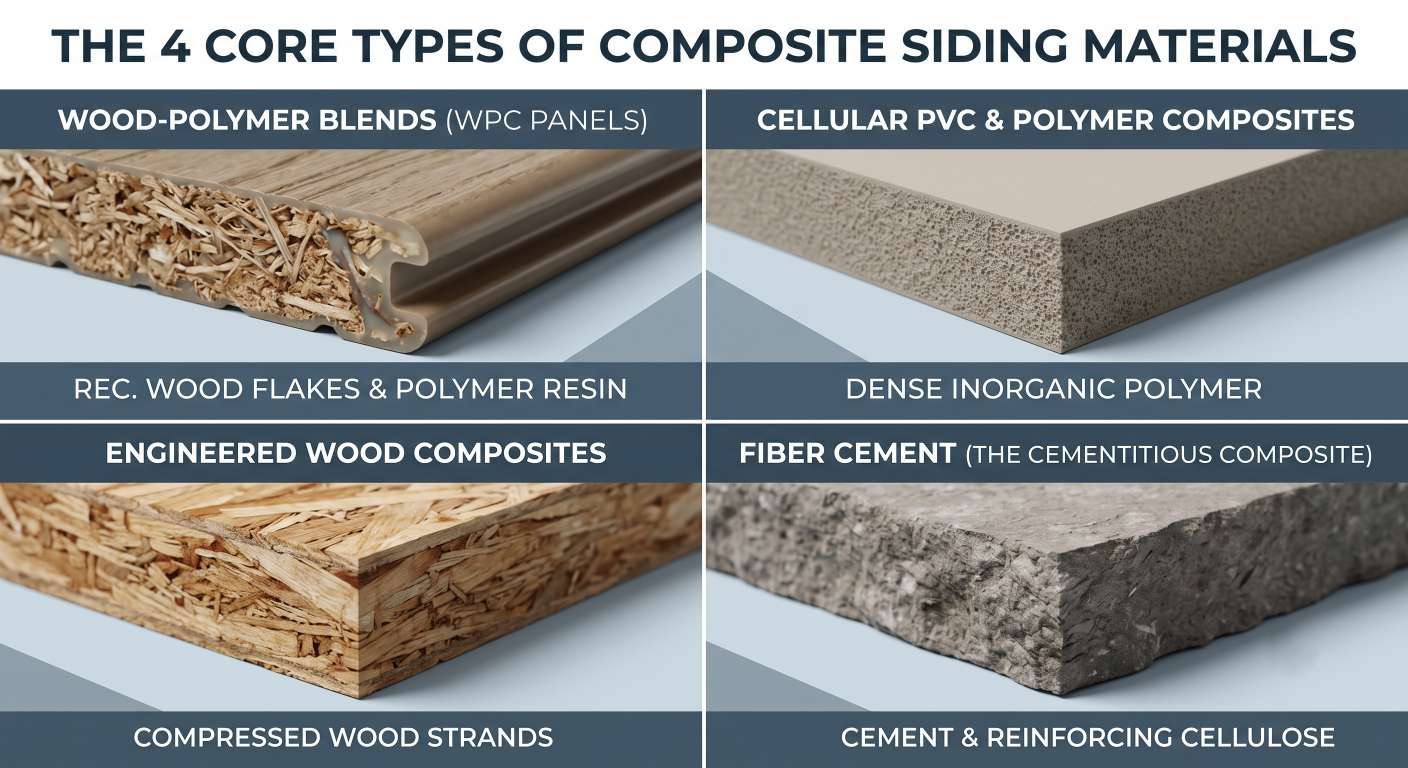
Not all composite siding boards are created using the same recipe. Depending on your local climate, your budget, and your structural goals, you will generally choose between four distinct composite siding options:
1. Wood-Polymer Blends (WPC Panels)
Think of this category as composite decking engineered specifically for vertical walls. True wood composite siding blends recycled wood flakes and sawdust with melted thermoplastic resins (like polyethylene or PVC).
These composite siding products offer phenomenal workability. Installers can cut, route, and fasten them using standard woodworking tools. Because the plastic component encapsulates the wood fibers, this siding composite resists swelling and creates a permanent barrier against subterranean termites.
2. Cellular PVC and Polymer Composites
When homeowners demand a 100% waterproof exterior, cellular PVC composite is the undisputed champion. These boards contain zero organic wood fibers. Instead, they are manufactured from inorganic polymers mixed with crushed mineral stone dust.
Because there is no cellulose inside the panel, it literally cannot absorb water. It will never rot, delaminate, or swell, even if sprinklers hit your house every morning. Furthermore, the color is bonded entirely through the core of the composition, meaning accidental scratches from patio furniture remain virtually invisible from the street.
3. Engineered Wood Composites
If you want the authentic rigidity of timber combined with modern chemical defenses, engineered composites (like LP SmartSide) are a brilliant middle ground. This variation compresses wood strands under extreme heat using industrial-grade resins, marine waxes, and zinc borate.
When weighing the pros and cons of engineered wood siding, homeowners love that this siding easily shrugs off hail and wayward baseballs. However, because it still utilizes real wood strands, installers must meticulously prime and paint any cut edges to maintain its weather seal.
4. Fiber Cement (The Cementitious Composite)
While often treated as its own category, fiber cement is technically a heavyweight composite. It combines Portland cement, fine silica sand, water, and reinforcing cellulose wood pulp.
Exploring advanced cement siding materials reveals why this dense material is so beloved in coastal and high-wind regions. Because it lacks synthetic plastics, it provides an unmatched fire resistant siding shield, a mandatory feature for homeowners building in strict wildfire zones.
Matching Profiles to Your Architecture
Once you select your raw material blend, you get to play architect. The physical profile you choose for your composite siding facades will dictate the visual energy of the entire property.
Clean Horizontal Lines
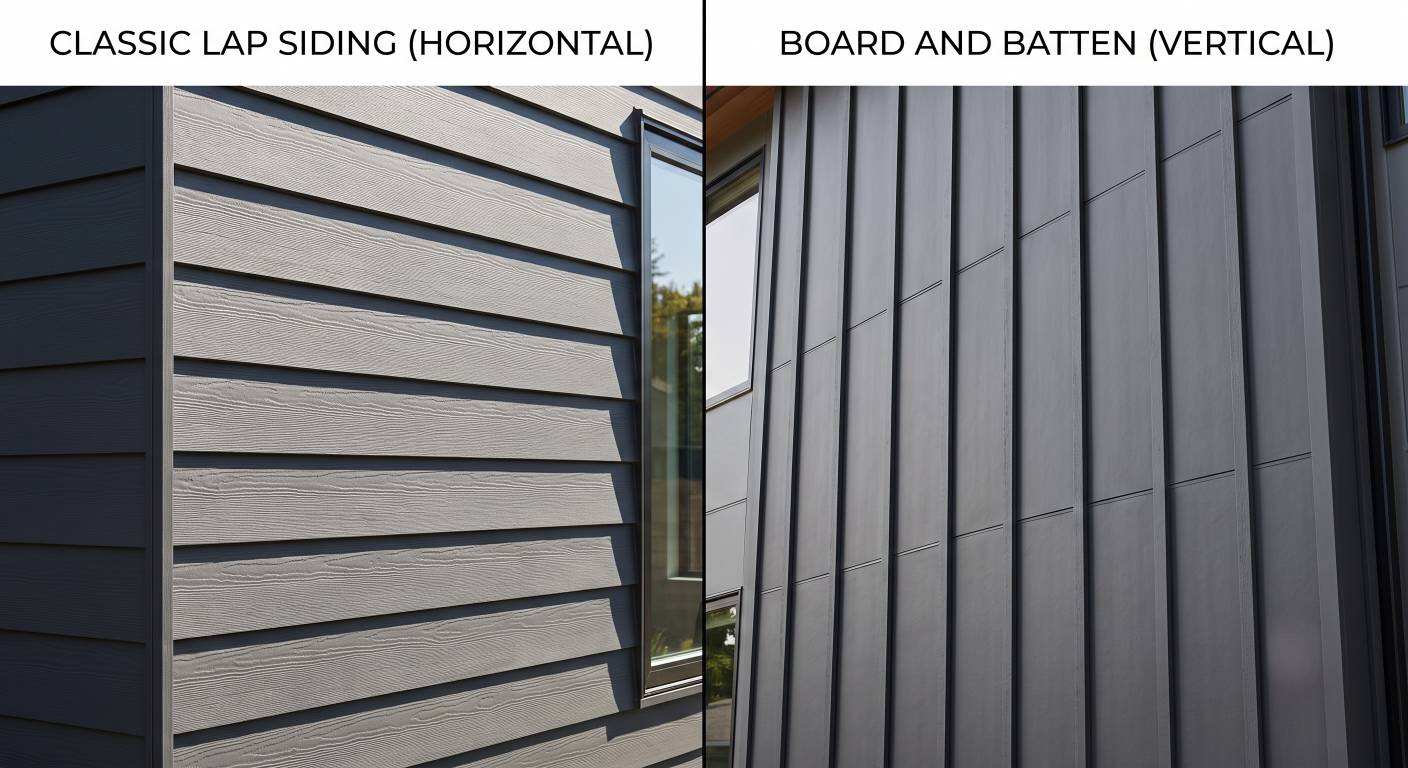
If you are new to exterior renovations and don’t know what lap siding is, it is the timeless horizontal layout where long boards slightly overlap to shed rainwater. Modern composite lap boards execute this classic geometry flawlessly. Because the material is dimensionally rigid, your walls retain perfectly straight shadow lines without the unsightly sagging or cupping that eventually plagues natural wood siding.
Striking Vertical Lines
For properties needing a modern architectural lift, vertical orientations are taking over suburban neighborhoods. Looking closely at trending board and batten siding demonstrates how wide vertical panels separated by thin wooden strips naturally draw the eye upward, making single-story homes look imposing and stately. Using thick composite panels for this layout prevents the wavy “oil-canning” look common in cheap metal alternatives.
How Composite Compares to Legacy Materials
Why are homeowners willing to pay a premium for these manufactured boards? It ultimately comes down to a balance of long-term value, maintenance, and aesthetics.
If you are renovating on a stricter upfront budget, traditional vinyl remains the go-to alternative. However, standard plastics face a few physical limitations. For example, darker colors can absorb intense thermal heat, leading to warping or fading over time. Composite siding solves these exact headaches as it allows you to opt for moody dark tones or breezy coastal shades without the risk of thermal buckling, giving you the high-end look of natural wood with the much longer life expectancy of vinyl siding.
The Bottom Line
At the end of the day, wrapping your home in advanced composite cladding is about securing long-term peace of mind. You get the rich, heavy aesthetics of traditional building materials paired with cutting-edge chemical engineering that fights off harsh weather, woodpeckers, and rot on your behalf.
Your property’s exterior is its first impression on the neighborhood and its primary armor against the elements. Take your time comparing the different resin and fiber formulations, learn what questions to ask your siding contractor, and choose a composite profile that makes you proud every single time you pull into the driveway.
Contact Sidex today, your siding installation experts in Northern California for a free, expert consultation, and let’s explore the types of composite siding for your next major renovation.