

Table of Contents
If your home was framed thirty years ago, you already know the sounds of a windy afternoon. You hear that faint, hollow rattling against the exterior walls. You feel the subtle draft sneaking through the electrical outlets. Homeowners searching for the best siding for a house usually want an exterior that acts like a thermal winter coat.
That almost always leads straight to searching for the best insulated vinyl siding.
Forget everything you remember about the brittle, faded plastic clapboard tacked onto 1980s subdivisions. Modern foam-reinforced vinyl is an engineering marvel. It dampens obnoxious street noise, shrugs off stray baseballs, and puts a permanent stop to interior drafts. Let’s look closely at the physics behind this cladding, explore the top industry manufacturers, and weigh the honest trade-offs.
What is Insulated Vinyl Siding?
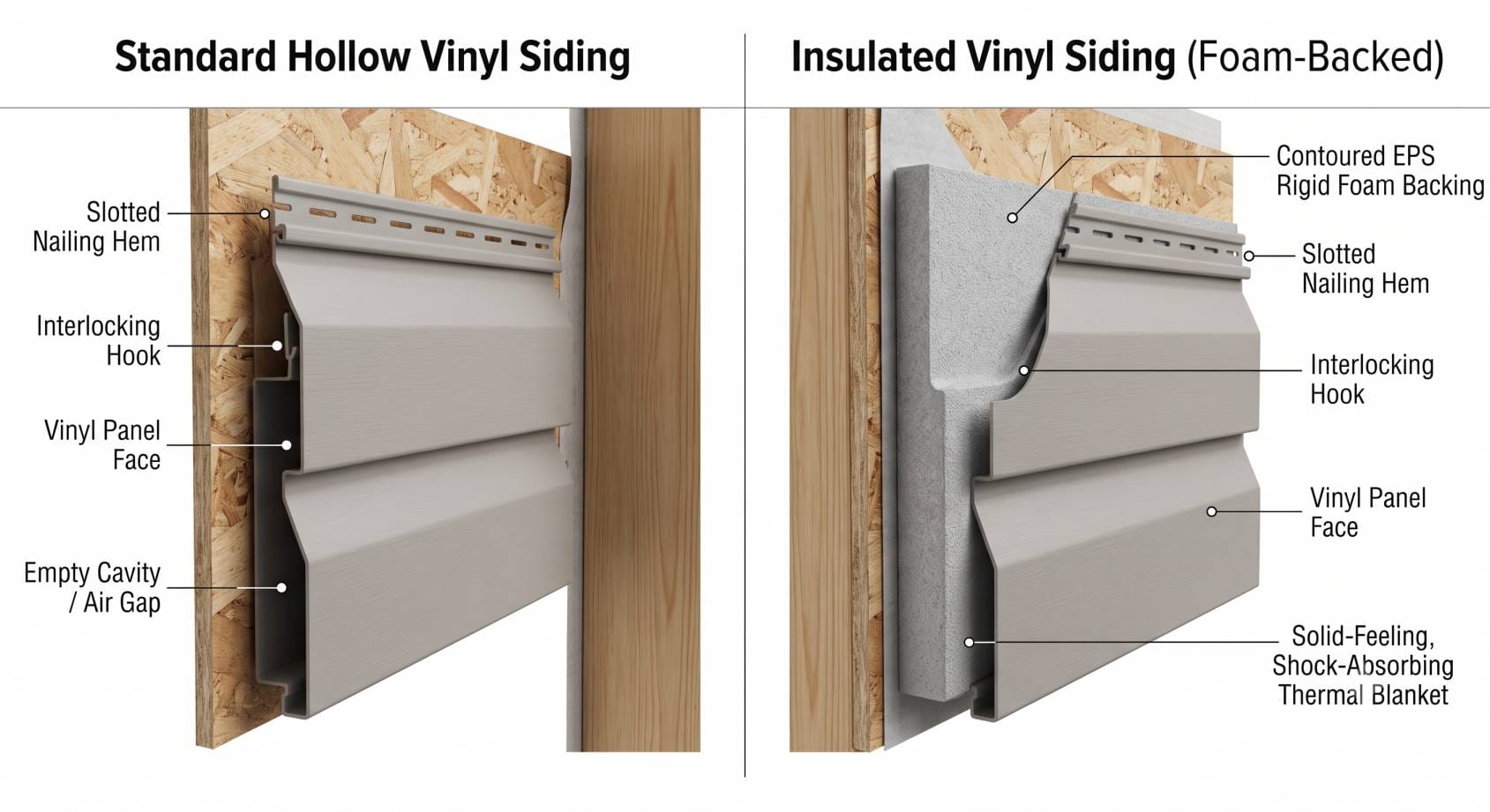
Standard builder-grade vinyl is essentially an empty plastic shell. Installers nail it across your exterior wall studs, leaving a hollow void between the back of the panel and your home’s weather wrap. That empty air gap catches gusts of wind, rattles loudly, and leaves your walls vulnerable to hail dents.
Modern vinyl siding with foam backing solves this by permanently adhering a custom-contoured layer of Expanded Polystyrene (EPS) or graphite-enhanced Neopor rigid foam directly to the reverse side of the board. The foam is sliced with precision to match the exact step-down geometry of the plank.
Contractors quickly install these by interlocking the insulated siding panels across your home, zero hollow space remains. You get a continuous, shock-absorbing thermal blanket hugging your exterior framing. This unique siding with insulation built in transforms flimsy cladding into a rigid, solid-feeling insulated home.
Top Insulated Vinyl Siding Brands & Manufacturers
Not all insulated vinyl siding brands are manufactured to the same standard. Before spending your remodeling budget, you should compare the top manufacturers and their R-values. Here are the heavy hitters leading the industry:
- Alside Prodigy: Widely recognized among reputable vinyl siding companies, Prodigy features an ultra-thick 1.5-inch foam backing that delivers an impressive R-value up to 5.0, making it an elite insulating siding.
- CraneBoard (Exterior Portfolio): Famous for utilizing BASF Neopor foam, CraneBoard provides up to 19% better thermal efficiency than standard white EPS. It is a premium insulated siding engineered to survive 160 mph hurricane winds.
- CertainTeed CedarBoards: Known for authentic cedar-grain molding, this foam backed vinyl siding offers fantastic rigid support and seamless panel interlocks.
- ProVia CedarMAX: Consistently top-rated for impact resistance, CedarMAX is a rugged insulated siding designed specifically to protect against hail and flying storm debris.
- Mastic Structure (Ply Gem): An incredibly popular siding with insulation attached that balances accessibility, high wind ratings, and superior moisture permeability.
Contact Sidex today to explore premium insulated vinyl siding options and schedule expert installation anywhere in Northern California.
Key Features & Benefits
Why are homeowners hunting for insulated siding instead of standard vinyl? The daily lifestyle benefits are undeniable.
1. Stopping the Thermal Bridge
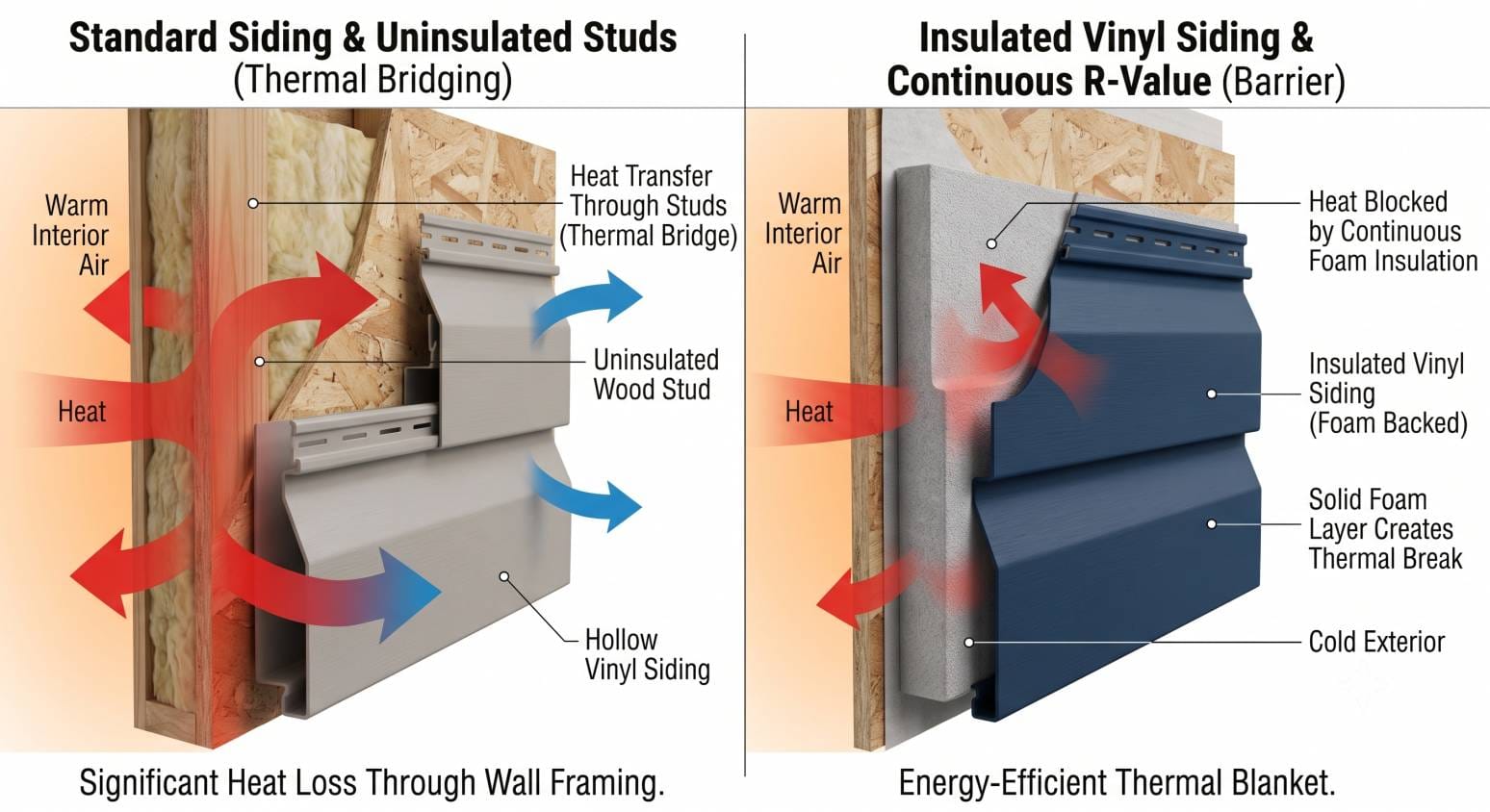
Your home’s wooden wall studs make up roughly 25% of your exterior walls. Because wood transfers heat, uninsulated studs act as thermal bridges that leak indoor warmth directly outside. Installing vinyl siding with insulation puts a continuous R-value breaker across those studs, lowering your utility bills year-round.
2. Extreme Impact Resistance
Hollow plastic shatters when hit by a hard object. Because insulated siding is fully backed by dense foam, it acts as a literal shock absorber. It boasts up to 64% higher impact resistance against hail, stray sports balls, and falling branches.
3. A Quieter Home
If you live near a busy intersection or a barking neighborhood dog, insulated siding is a massive upgrade. The thick foam core naturally dampens acoustic vibrations, reducing exterior noise intrusion by up to 45%.
4. Eliminating Pest Nests
Hollow vinyl cavities are prime real estate for wasps, spiders, and pests. Because insulated siding completely fills that gap, pests physically have nowhere to build nests.
The Installation Process: Why Precision Matters
You can buy the most expensive insulated vinyl siding on the market, but a sloppy installer will ruin it in an afternoon. Hanging siding is an exact science that requires certified professionals:
- Level Alignment: Because the boards are rigid, installers must verify that starter strips are perfectly dead-level to prevent the entire wall from visually telegraphing waves.
- Thermal Expansion Gaps: Vinyl expands and contracts with the sun. Crews must leave strict clearance gaps at the overlapping seams of the siding to keep panels from buckling during July heatwaves.
- Fastener Tension: Nails must never be driven tight against the nailing hem of the vinyl siding; panels must literally hang loosely to allow for smooth thermal gliding.
Real-World Pros & Cons
To make an informed decision, let’s balance the financial trade-offs against other popular building materials:
The Pros:
- Zero Painting Required: Unlike traditional wood siding, the color is baked through the vinyl, meaning you will never spend summers scraping peeling paint.
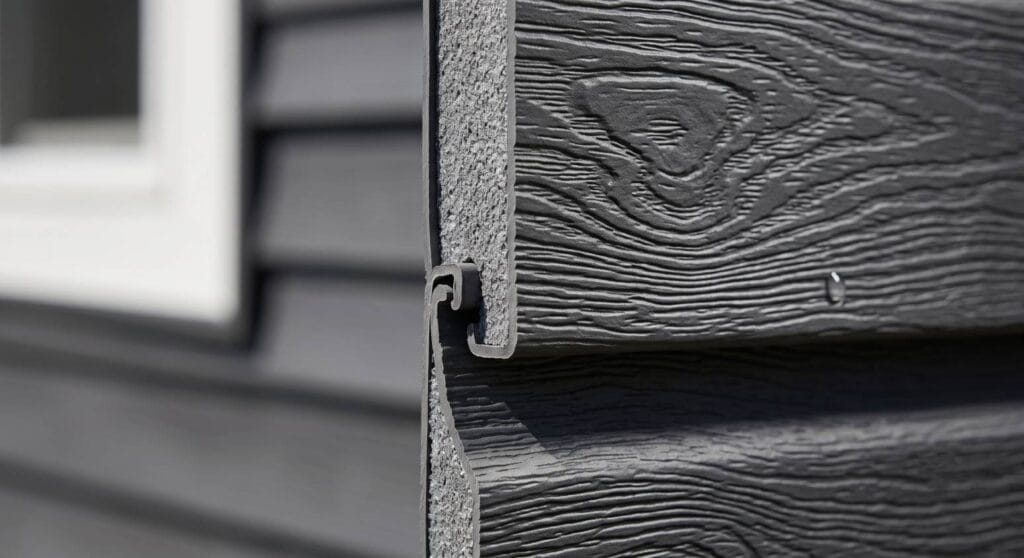
- Design Freedom: Historically, dark plastics melted in the sun. Today, advanced capping technology lets you choose dramatic dark colors like rich navy or charcoal, without thermal distortion.
- Versatile Profiles: Whether you want horizontal or vertical lines, insulated boards execute the geometry cleanly.
The Cons:
- Higher Upfront Investment: Because foam adds material costs and installation complexity, insulated panels sit at a higher price point than standard vinyl.
- Moisture Trapping Risk: If installed incorrectly without proper house wrap, foam can trap interior moisture. Plastic requires strict vapor management.
- Heat Vulnerability: For homeowners in Northern California wildfire zones, non-combustible cement siding materials offer a Class A rating for fire resistant siding that melting plastics simply cannot achieve.
Ultimately, when factoring in the impressive 30 to 40+ years life expectancy of vinyl siding; foam-reinforced cladding remains one of the smartest, high-return remodeling investments available today.
The Bottom Line
Upgrading your home’s exterior to insulated vinyl siding ultimately comes down to balancing immediate comfort against long-term property value.
If you are planning a fast cosmetic flip, standard plastic panels might keep your initial costs low. But if your goal is to settle into a quiet, structurally energy-efficient home that saves you money on utility bills month after month, investing in premium vinyl siding with insulation pays massive daily dividends.
Contact Sidex today, your siding installation experts in Northern California for a free, expert consultation, and let’s explore insulated vinyl siding for your next home upgrade.