

Table of Contents
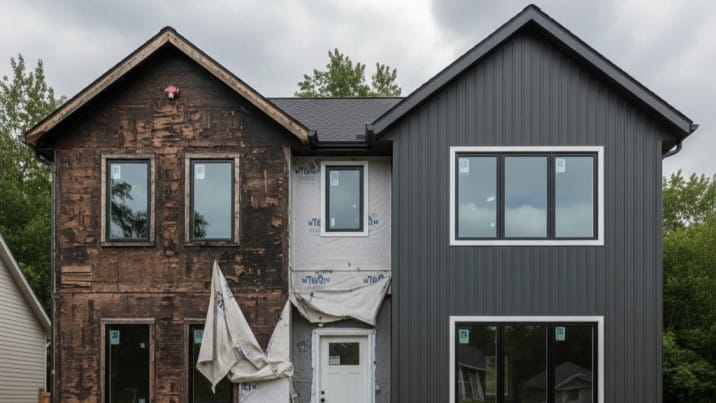
Your home’s siding is its first line of defense. It stands between your family and the rain, wind, sun, and snow. But unlike a roof that might lose a shingle, or a window that cracks, siding often fails silently. It fades slowly, rots from the inside out, or hides moisture damage until the structural framing is compromised.
This leads to the question we hear most often at Sidex which is when to replace siding. Is it when the color fades? When you see a crack? Or is there a specific timeline you should be following?
The truth is, waiting for a catastrophic failure (like a wall collapsing from dry rot) is the most expensive way to handle home maintenance.
This guide will walk you through exactly how to determine when siding needs to be replaced, exploring the lifespan of different materials, the subtle warning signs of failure, and the design trends that might prompt you to upgrade sooner.
How Often Does Siding Need to Be Replaced? (By Material)
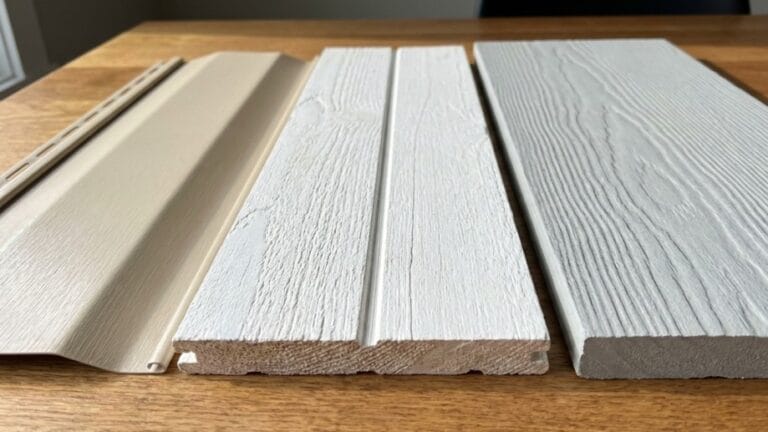
Before we hunt for damage, we need to look at the calendar. Nothing lasts forever, and the material covering your home has a distinct expiration date. If you have purchased an older home, knowing how often siding needs to be replaced based on its material type is your first step in budgeting for the future.
1. Vinyl Siding (20–40 Years)
Vinyl is durable, but it isn’t invincible. Over decades, the sun’s UV rays break down the plastic compounds, making them brittle. If your home was sided in the 1990s, you are entering the danger zone where panels crack upon impact rather than flexing.
2. Wood Siding (20–40 Years)
Wood offers unmatched beauty, but it demands payment in the form of maintenance. Even with perfect painting and sealing, moisture eventually wins. Older sheet materials, like the once-popular T1-11 siding, are notorious for absorbing water at the bottom edges, leading to delamination and rot after just two decades if not meticulously maintained.
3. Fiber Cement (50+ Years)
This is the heavyweight champion of longevity. Materials like James Hardie plank are engineered to resist rot, fire, and pests. However, the finish (paint) will need attention long before the board itself fails.
4. Synthetic & Composite (30–50 Years)
Older composites have a troubled history. If your home was built in the 1980s or 90s, you might be dealing with hardboard siding (often called Masonite). This pressed-wood product acts like a sponge when the paint seal fails, leading to rapid swelling and deterioration that demands immediate replacement.
The Visual Signs: How to Tell When Vinyl Siding Needs to Be Replaced
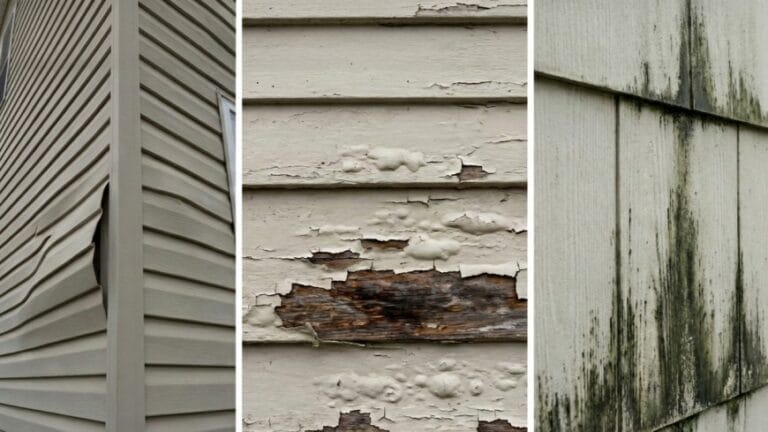
You don’t always need a calendar to tell you it’s time. Your house will talk to you if you know where to look. When evaluating when to replace vinyl siding or other materials, look for these physical scars.
1. Warping, Buckling, and Melting
Vinyl siding should hang loosely on the wall to allow for expansion and contraction. If you see it warping or buckling, it often means the boards are jammed together tight or the material has lost its structural integrity. In extreme cases—especially with the rise of energy-efficient windows that reflect concentrated sunlight—you might actually see melted distortion.
2. Cracks and Holes
A small crack might seem cosmetic, but it is a breach in your armor. Wind-driven rain can enter through a hairline fracture, and trapped moisture behind the siding is a recipe for disaster. If you see cracks in multiple areas, it isn’t a repair job; it is a sign the material has become too brittle to function.
3. Fading and Chalking
Have you ever brushed against your house and had white powder come off on your jacket? That is oxidation. It means the waterproofing oils or UV inhibitors in the vinyl have failed. While you can paint vinyl, significant fading is often a precursor to cracking.
4. Bubbling Paint (Wood & Fiber Cement)
If you have wood siding and you see the paint bubbling or peeling, it might not be a “bad paint job.” It is often a sign of siding damage from the inside. Moisture trapped in the wood tries to escape, pushing the paint off the surface. If you scrape the paint and find the wood underneath is soft or dark, you are dealing with rotten siding.
The Hidden Signs You Shouldn't Ignore
Sometimes, the most dangerous signs aren’t on the exterior at all. When does siding need to be replaced if the outside looks “okay”? When it fails to protect the inside.
1. Skyrocketing Energy Bills
If your heating or cooling costs have spiked, and you have ruled out the HVAC system or attic insulation, look at your walls. Bad siding allows drafts to penetrate the home. Old siding often lacks the insulation wrap (house wrap) used in modern construction. A siding replacement project gives you the chance to add rigid foam insulation, significantly tightening your home’s thermal envelope.
2. Peeling Paint Inside the House
This is a red flag that scares every contractor. If the wallpaper is loose or paint is peeling on the interior side of an exterior wall, water is likely soaking through your siding, bypassing the moisture barrier, and soaking your drywall. This is an emergency.
3. Mold, Mildew, and Fungus
Green algae on the north side of a house is common and cleanable. But mold growing at the seams of your siding, or mushrooms sprouting from the bottom of a wood board, indicates that water is held in the material. This isn’t just a cleaning issue; it is a structural rot issue.
Replace Home Siding for Value
Functionality is critical, but let’s be honest: curb appeal matters. How do you know when siding needs to be replaced? Sometimes, it’s simply when you can no longer stand the look of your home.
Modern siding technology has moved light-years beyond the options available twenty years ago. You are no longer stuck with pale yellow horizontal strips.
Vertical versus Horizontal
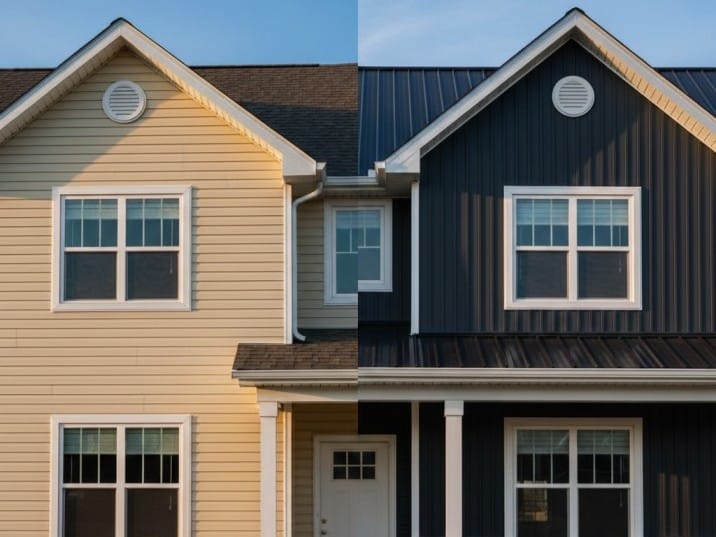
You can completely change the architectural profile of your home by switching the orientation. The modern farmhouse trend relies heavily on vertical versus horizontal layouts, often using “Board and Batten” siding to make a home look taller and more contemporary compared to traditional lap siding.
Stucco vs Siding
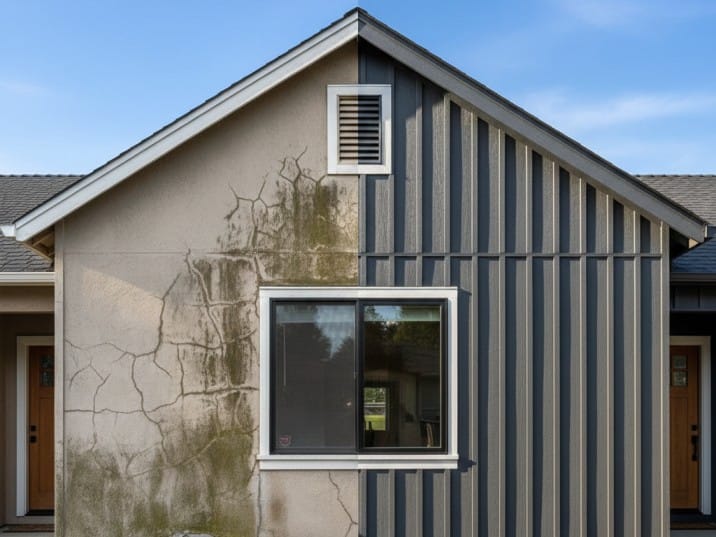
Many homeowners in Northern California debate stucco vs siding. While stucco is durable, it can crack with ground movement. Replacing old, cracked stucco with modern fiber cement siding can give a home a crisp, new geometry that is easier to maintain and repair.
Masonry Accents
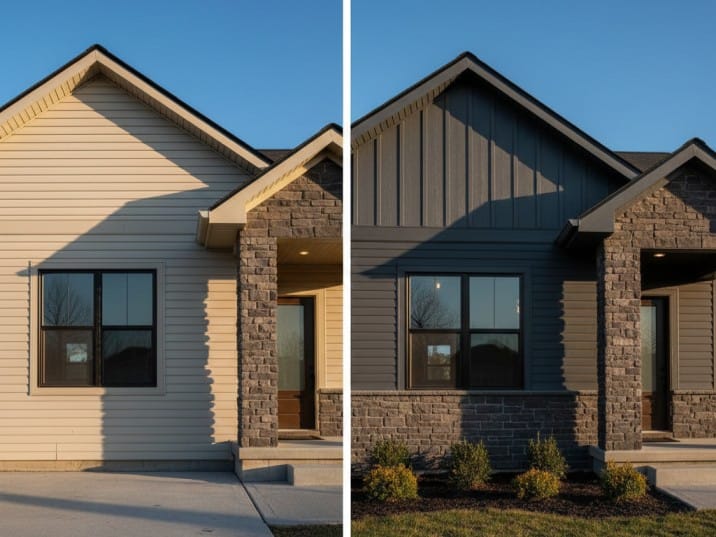
If you want to elevate your home into the luxury tier, you don’t have to do the whole house in one material. Many designs now replace siding with brick or stone veneer on the lower third of the home (the skirt) or around the entryway. This adds texture and value without the massive cost of a full masonry build.
The "Black House" Trend
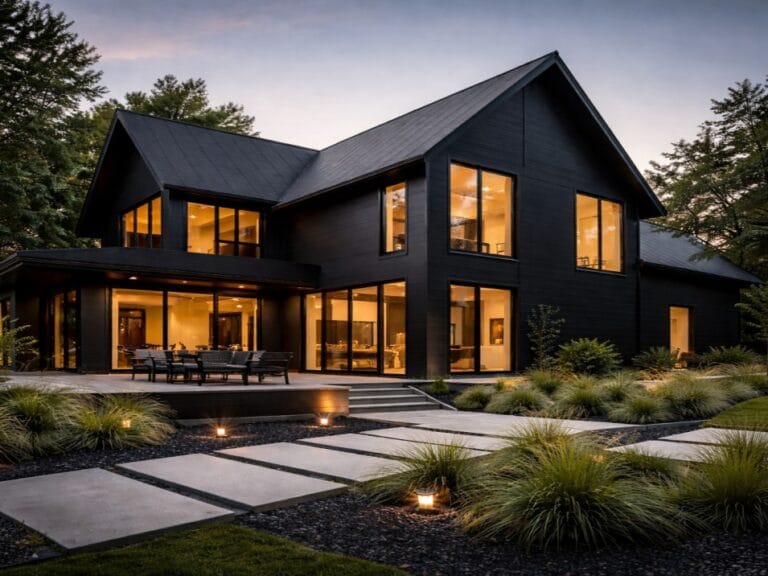
One of the hottest trends in 2025/2026 is dark exteriors. However, you have to be careful. Houses with black siding absorb massive amounts of heat. Standard vinyl can warp under this thermal load. If you want this look, you almost certainly need to upgrade to high-performance fiber cement or specialized composite cladding engineered to handle the heat.
The Logistics
You’ve decided it’s time. You’ve seen the rotten siding, you’ve felt the drafts, and you are ready for a change. Now comes the paperwork.
One of the first questions homeowners ask us is: do I need a permit for siding replacement? In almost all jurisdictions, the answer is yes. Siding is considered a structural weatherproofing layer. The city needs to inspect the flashing around windows and doors to ensure your home is watertight. Skipping this step can lead to fines and issues when you eventually sell the home.
Vetting the Pros
This is a major construction project. You are essentially skinning your house. You need to know what questions to ask a siding contractor before signing a contract. You should be asking things like:
- “Do you install a house wrap or insulation board?”
- “How do you handle waste disposal?”
- “Are you certified by the siding manufacturer?” (Crucial for warranties on products like James Hardie).
The Bottom Line
So, how often to replace vinyl siding or wood siding? The answer is: before it fails completely.
If you are seeing warped panels, soft wood, or your energy bills are climbing, your home is asking for help. A siding replacement project is one of the highest ROI investments you can make. It stops the rot, lowers your bills, and instantly transforms the look of your property.
Don’t let bad siding compromise your biggest investment. Ready to give your home a new skin? Contact Sidex, your trusted siding and deck contractors, for a free consultation today. Let’s protect your home for the next 50 years.