

Table of Contents
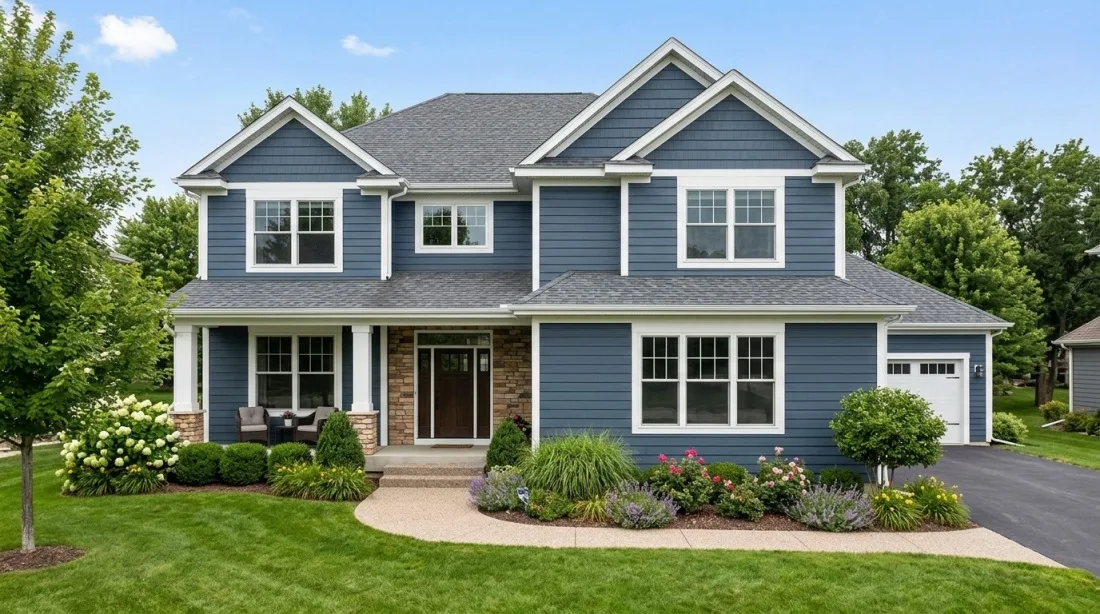
Choosing siding is about more than finding a color you like on a sample. The right shade needs to work with your roof, windows, trim, stone, landscaping, and the style of your home. If you’re still comparing the best siding for a house, color is only one part of the decision, but it can have a major effect on the finished exterior.
With so many vinyl siding colors available today, homeowners have far more choices than the traditional white, beige, and gray. From soft neutrals to deep blues and greens, the challenge is narrowing those choices down to a palette that will still look right years from now.
What Are the Most Popular Vinyl Siding Colors?
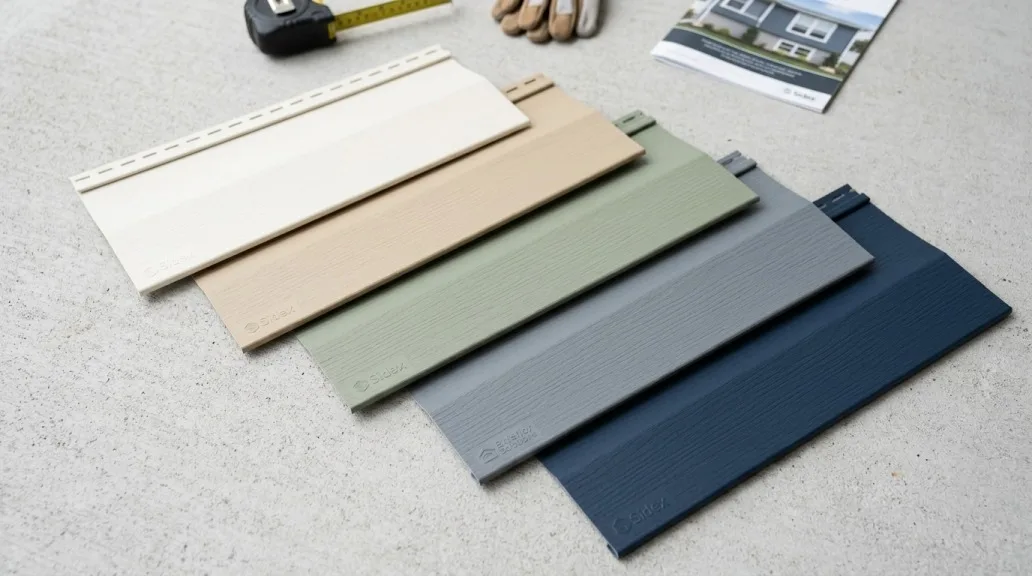
The popular vinyl siding colors homeowners choose tend to fall into a few broad groups: light neutrals, warm earth tones, cool grays, blue-grays, greens, and deeper accent shades.
Some of the common vinyl siding colors include:
- White and off-white
- Almond and cream
- Beige and sand
- Gray and charcoal
- Slate blue
- Sage and olive green
- Brown and warm taupe
- Deep navy and other dark tones
Current exterior trends are also moving toward warmer neutrals, nature-inspired greens, blue-grays, and richer dark colors. Ply Gem’s current color resources similarly organize siding into light, classic, and deeper color families.
The goal isn’t necessarily to pick the trendiest shade. A good siding color should make sense with the architecture of the house and the materials already on it.
Where Should You Start?
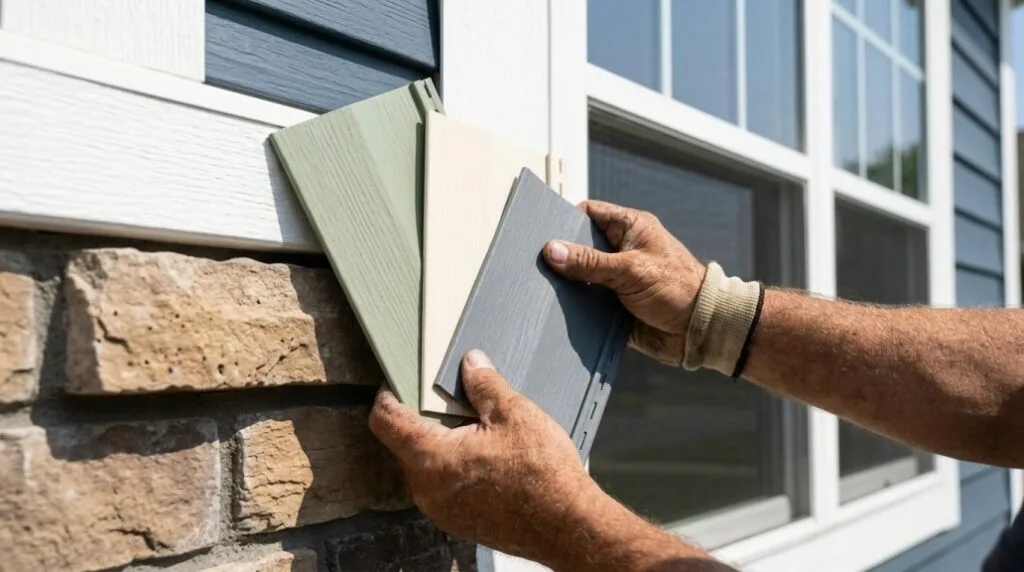
Start with the parts of your home that aren’t changing.
Look at the roof, brick or stone, window frames, front door, garage door, and permanent exterior features. These elements already have colors and undertones, so your siding needs to work alongside them.
For example, a warm brown roof may work naturally with cream, beige, tan, or warm gray siding. A charcoal roof can give you more flexibility with cool gray, white, blue-gray, or even deeper colors.
This is also where looking at house vinyl siding colors in context matters. A small sample can look completely different once it covers an entire wall.
How to Use a Vinyl Siding Color Chart
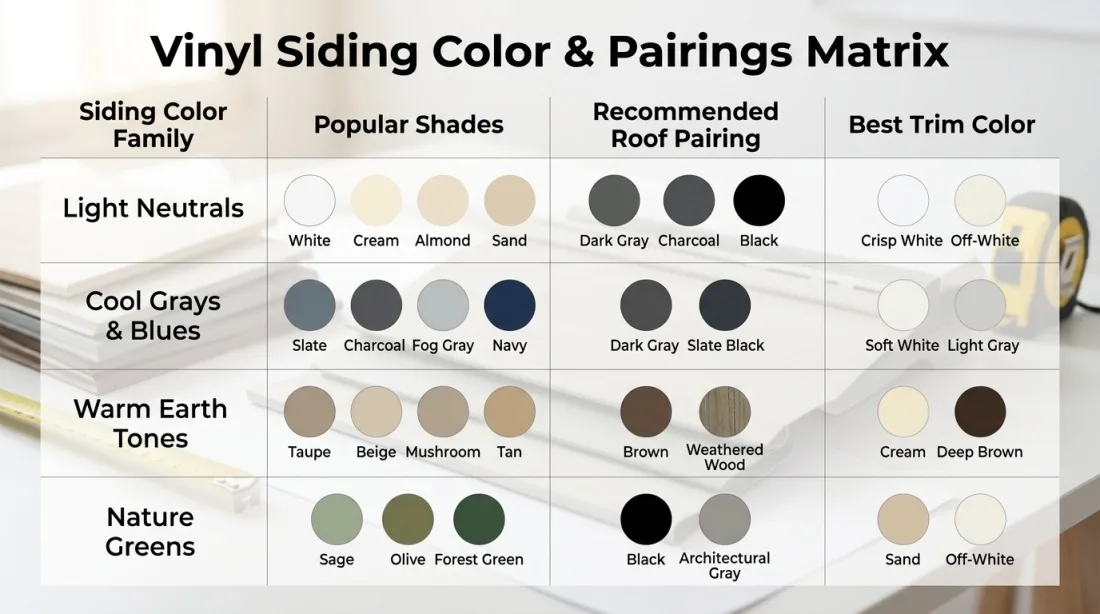
A vinyl siding color chart is useful for narrowing your choices, but don’t treat the printed or digital color as an exact representation of the finished siding.
Lighting, screen settings, surrounding colors, and even the size of the surface can change how a shade appears. Manufacturers themselves caution that displayed colors may not exactly match the actual product.
When comparing a color chart vinyl siding selection, look at several shades together rather than choosing one in isolation.
A simple process works well:
- Pick three to five colors you genuinely like.
- Remove shades that fight with your roof or stone.
- Compare the remaining options in daylight.
- Look at the siding next to your actual trim and windows.
- Request physical samples before making the final decision.
Vinyl Siding Color Options Beyond Basic Neutrals
Neutral doesn’t have to mean boring.
Warm taupe, soft beige, mushroom, greige, muted green, and blue-gray can give a home more character without making the exterior feel dated quickly.
For homeowners who want stronger contrast, deeper charcoal, navy, forest green, or brown can work particularly well as the main siding color or as an accent.
The key is proportion. A dark siding color paired with equally dark trim and roofing can make a home feel heavy. A lighter siding color with darker windows, shutters, or a front door can create definition without overwhelming the exterior.
Creating Vinyl Siding Color Schemes
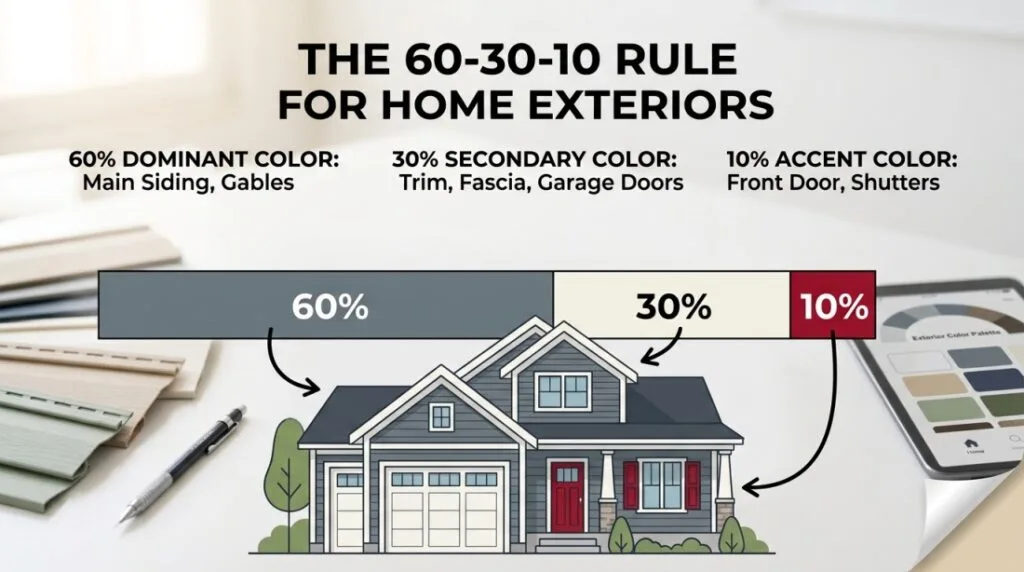
The best vinyl siding color schemes usually have a clear hierarchy instead of several competing colors.
A practical starting point is:
Main siding: The dominant exterior color.
Trim: A complementary or contrasting color around windows, doors, corners, and rooflines.
Accent: A smaller area such as the front door, shutters, gables, or architectural details.
You don’t need five different colors to make a house interesting. In fact, limiting the number of exterior colors can make the overall design feel more intentional. It’s recommended to think about siding, stone, trim, and other exterior elements as one coordinated palette rather than unrelated selections.
What Are the Best Exterior Vinyl Siding Colors for Different Styles?
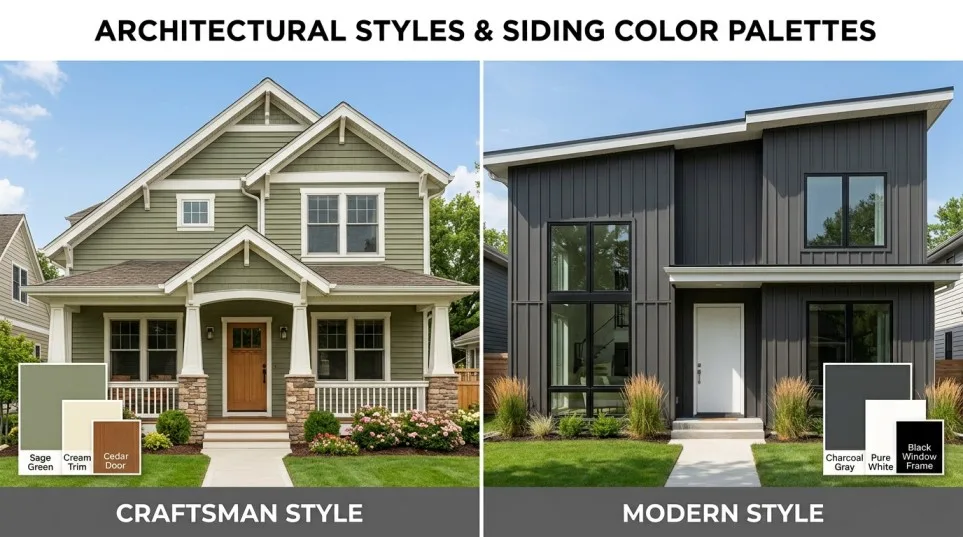
1. Traditional Homes
Classic white, cream, beige, gray, and muted blue work well with traditional architecture. Dark shutters or a contrasting front door can add definition.
2. Modern Homes
Gray, charcoal, black, crisp white, and restrained two-tone combinations can emphasize clean architectural lines.
3. Craftsman Homes
Earthy greens, warm grays, taupes, brown tones, and muted blues pair naturally with stone, wood details, and substantial trim.
4. Coastal Homes
Soft white, pale gray, blue-gray, muted blue, and sandy neutrals can create a lighter exterior without relying on overly bright colors.
5. Ranch Homes
Warm neutrals, sage greens, soft whites, and medium grays can give a ranch home a fresh appearance while keeping the proportions of the house balanced.
Should You Choose Premium Vinyl Siding Colors?
If you’re comparing premium vinyl siding colors, don’t choose based on the color range alone. Look at the entire siding product: panel thickness, profile, texture, warranty, color technology, installation requirements, and how the product is designed to perform.
A premium color isn’t automatically a better choice for your particular house.
The same shade can also look very different depending on the siding profile and texture. A smooth panel may feel cleaner and more contemporary, while a woodgrain finish can give the same color a warmer, more traditional appearance.
Don't Choose Siding Color From a Screen
This is one of the easiest mistakes to make.
A color that looks perfect on your phone may look noticeably different outside. Before ordering, compare physical samples against the home’s roof, trim, windows, and stone at different times of day.
If you’re considering darker exterior vinyl siding colors, pay particular attention to how the color looks in direct sunlight as well as shade.
And don’t forget the surrounding property. Trees, landscaping, neighboring homes, and the amount of natural light around the house can all affect how a siding color reads.
The Bottom Line
There are plenty of vinyl siding color options, but choosing well isn’t about finding the biggest color collection. It’s about finding a shade that works with the home you actually have.
Start with the fixed elements, narrow your choices, compare physical samples, and build the siding, trim, and accents as one exterior palette.
The right vinyl siding colors should make your home look like itself; just better, cleaner, and more considered.
Ready to transform your home’s exterior? Contact Sidex today for a free, comprehensive consultation. As your local experts in premium house siding, we will help you select, design, and install a beautiful, durable exterior that you will be proud of for decades to come.