

Paint or Stain Deck? The Ultimate Guide to Protecting Your Outdoors
You’ve invested time, money, and dreams into your backyard deck. It’s where you host Fourth of July barbecues, sip your morning coffee, and watch the sunset. However, wood, even the highest-quality redwood or pressure-treated pine, has a natural enemy: the elements. Sun, rain, and temperature swings are constantly working to break down your investment.
So, you are faced with the age-old homeowner question: should I paint or stain my deck?
As Northern California’s premier exterior experts, we at Sidex have seen what happens when the wrong choice is made. We’ve seen beautiful boards rot under peeling paint and neglected stains fade to gray.
This guide will walk you through the paint vs stain deck debate with the depth and honesty you need to make the right call for your home.
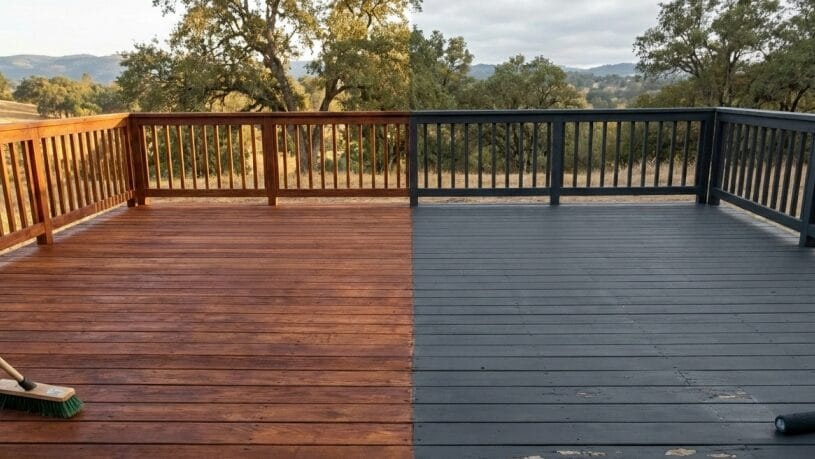
The Core Difference: Film vs. Penetration
Before we dive into the pros and cons, it is crucial to understand how these two products work. They interact with wood in fundamentally different ways.
Paint is a film-forming finish. It sits on top of the wood, creating a thick, opaque shell. It hides the grain completely and seals the surface. Think of it like wrapping your deck in a protective blanket.
Stain, generally speaking, is a penetrating finish. It soaks into the wood fibers. While it provides a barrier against moisture and UV rays, it works from the inside out (or sits very thinly on top), allowing the natural texture and grain of the wood to show through.
The Case for Staining Your Deck
For many homeowners (and most wood purists), stain is the gold standard. When you ask whether stain or paint is better for a brand-new deck made of high-quality lumber, the answer is almost always stain.
1. Highlighting Natural Beauty
If you have premium lumber, you want the grain to take center stage. For example, staining a redwood deck with a transparent or semi-transparent finish is the best way to preserve its complex grain patterns and rich, iconic tones.
2. Wood Breathability
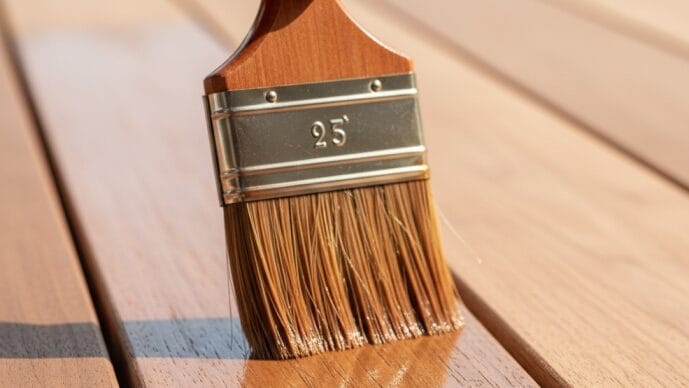
This is the technical advantage. Wood naturally expands and contracts with temperature changes. It also needs to “breathe” to release moisture. Because stain penetrates the fibers rather than sealing them shut, it prevents moisture from getting trapped inside the wood, significantly reducing the risk of rot.
3. Easier Maintenance
Notice we said easier, not zero. Deck stain vs paint maintenance is very different. When the stain fails, it simply fades. To refinish it, you typically just need to clean the deck and apply a fresh coat. There is rarely a need for the back-breaking scraping required when paint fails.
4. Safety (Grip)
Stain preserves the natural texture of the wood, providing natural traction. A painted deck can become incredibly slippery when wet, acting like a slide after a rainstorm.
Deck Painting
While we often lean toward stain for wood health, there are valid reasons to choose paint. In the painting vs staining deck debate, paint wins on sheer armor and variety.
1. Unlimited Design Options
If your home has a specific color palette, say, a modern farmhouse white or a deep charcoal gray, paint is your best friend. You aren’t limited to shades of brown. You can match your deck railing to your window trim perfectly.
2. Hiding Imperfections
If your deck is older and has seen better days, paint acts as a cosmetic surgeon. It fills small cracks, covers splinters, and hides stains that sanding couldn’t remove. If you are wondering if it is better to paint or stain a deck that is old, paint is often the answer if you want to mask age.
3. Longer Initial Lifespan
A high-quality, professional paint job can last 10 years before it needs major attention, whereas stain typically needs a refresh every 2 to 4 years. However, there is a catch (see below).
The Danger of Painting: The “Peeling Nightmare”
The biggest downside to painting is failure. When paint fails, it doesn’t fade gracefully; it peels, cracks, and chips. Once this happens, moisture gets trapped under the remaining paint, accelerating rot. Fixing a peeling painted deck is a massive job that involves stripping every inch of paint back to bare wood before you can recoat.
Solid Color Stain
If you are torn between deck paint or stain, there is a hybrid option: solid color stain.
Solid stains look very similar to paint; they are opaque and hide the wood grain completely, offering a wide range of colors. However, they are thinner and more breathable than paint, forming a much more flexible film.
This makes solid stain the best compromise for sealing pressure treated wood on older decks where you want the uniform look of paint but want to avoid the disastrous peeling associated with latex or oil-based paints.
Decision Matrix: Should I Paint or Stain My Deck?
Still unsure? Use this quick checklist to decide paint vs stain deck for your specific situation.
Choose STAIN if:
- You have high-quality wood: Don’t cover up expensive Redwood or Cedar.
- You live in a wet climate: Breathability is key to preventing rot.
- You hate scraping: You prefer washing and recoating over stripping and peeling paint.
- You want safety: You need a non-slip surface for kids or pets.
- The deck is new: Let that new wood shine.
If your deck was built decades ago, there’s a chance it no longer meets modern safety standards. Updating railing height is one of the simplest ways to bring an older deck into compliance.
Choose PAINT if:
- The deck is old and weathered: You need to fill cracks and hide structural ugliness.
- You want a specific color: You are chasing a specific design aesthetic (like a white railing).
- You want a flat finish: You don’t like the look of wood grain.
- You are prepared for the prep: You are willing to put in the work (or hire pros) to sand and prime perfectly.
The Cost Factor: Paint vs Stain

When analyzing stain vs paint deck costs, look at both the upfront price and the long-term cost.
- Upfront: Paint or stain deck costs are roughly similar regarding labor, but paint materials (primer + high-quality exterior paint) are generally more expensive than stain. Painting also takes longer due to drying time between coats of primer and paint.
- Long-Term: Stain is cheaper to maintain. A maintenance coat of stain might cost you a Saturday afternoon and $100 in materials. Fixing a peeling painted deck five years later could cost thousands in labor to strip and sand.
Regardless of your choice, preparation is 90% of the job. Since a finish is only as good as the surface it adheres to, researching the best way to sand a deck is vital as you need a clean, smooth surface for either product to last.
The Bottom Line
As senior contractors, our honest advice usually leans toward stain.
In the long run, staining a deck is more forgiving. It keeps the wood healthier by allowing it to breathe, and the maintenance is far less headache-inducing. Once you paint a deck, you are committed to painting it forever unless you pay for a full resurfacing.
However, if your deck is nearing the end of its life and you want to squeeze a few more years out of it while hiding flaws, paint can be a powerful tool.
Regardless of which path you choose, the secret to a long-lasting deck is professional application. A poor paint job will peel in a year. A poor stain job will fade in the summer.
If you want your outdoor space to look pristine without the hassle of DIY, trust the experts who know Northern California weather best.
Ready to transform your deck?
Contact Sidex, your trusted siding and deck contractors, today for a consultation. Let’s build something beautiful together.