

Table of Contents
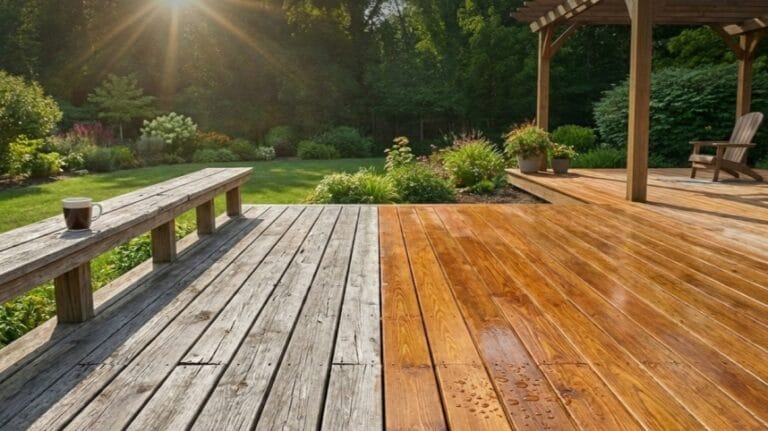
You walk out onto your deck with your morning coffee, and instead of the rich, warm wood tones you remember, you’re greeted by dull, gray boards. Maybe there is a splinter or two popping up near your foot. This deterioration is the natural lifecycle of outdoor lumber, but it begs the question every homeowner eventually wrestles with: should I stain or seal my deck?
It sounds like a simple choice, but the difference between deck sealing vs staining is often misunderstood. Is one better than the other? Can you do both? Or are they just different names for the same product? We know that the right choice depends entirely on your wood species, the age of your deck, and honestly how much maintenance you are willing to handle.
This guide explores the stain vs seal debate in depth, cutting through the marketing noise to help you make the right investment for your outdoor oasis.
Sealant vs Stain: What is the Actual Difference?
To make the right choice, you first need to understand chemistry. While people often use the terms interchangeably, wood stain vs sealer are two distinct protective methods with different goals.
Deck Sealer
A deck sealer is typically a clear, transparent coat. Its primary job is to lock out moisture. Think of it as a clear raincoat for your wood. It penetrates the grain or sits on the surface to repel water, preventing rot, fungal growth, and warping.
But here’s the catch. Because deck sealers are clear, they lack pigment. Pigment is what blocks UV rays. Without pigment, a clear sealant vs stain offers zero protection against the sun. The sun’s UV rays break down lignin, the natural glue that holds wood fibers together, causing the surface to gray and splinter even if it is sealed against water.
Deck Stain
A deck stain also seals the wood against moisture, but it adds pigment (color). Whether it is a light “honey” tone or a deep “chocolate” brown, that pigment acts as sunscreen for your deck. It blocks UV rays, preventing the wood fibers from breaking down.
Modern high-quality stains are often 2-in-1 products, effectively staining and sealing a deck in a single step.
Deck Sealing vs Staining: The Deep Dive
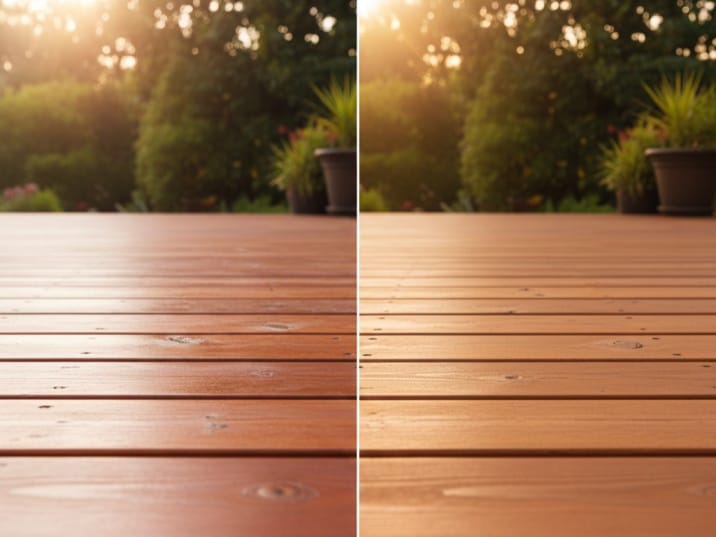
Let’s break down the pros and cons of each method to see which fits your lifestyle.
Option 1: Sealing a Deck
When you compare sealing vs staining a deck, sealing is often seen as the “naturalist” choice, and it is a common starting point for sealing pressure treated wood to prevent early rot.
The Pros:
- Natural Aesthetics: If you love the look of raw wood and don’t mind it weathering to a silvery-gray patina, a clear deck sealer or stain is your answer. It keeps the water out while letting the wood age naturally.
- Easier Application: Clear sealers are often thinner and more forgiving to apply than pigmented stains. You don’t have to worry about lap marks or uneven color.
- Cost: Generally, clear water repellents are cheaper upfront than premium stains.
The Cons:
- No UV Protection: This is the biggest drawback in the stain vs sealer debate. Without UV blocking, your deck will eventually crack and splinter.
- Short Lifespan: Clear sealers typically degrade faster than stains, often needing to be reapplied every single year to remain effective. This maintenance cycle is a major factor when considering how long a cedar deck will last, as the wood needs constant protection to stay structurally sound.
Option 2: Staining a Deck
When asking “is it better to stain or seal my deck?” for longevity, staining is usually the clear winner.
The Pros:
- UV Protection: The pigments in the stain stop the sun from destroying your expensive Redwood or Cedar.
- Design Variety: You can choose the opacity that suits you:
- Transparent/Toner: Adds a slight tint but shows 90% of the grain.
- Semi-Transparent: The most popular choice; adds rich color but keeps the wood grain visible. It is often the gold standard for staining a redwood deck to preserve its natural beauty.
- Solid Color: Looks like paint but breathes like stain; hides imperfections well.
- Longer Life: A high-quality stain can last 2–4 years before needing a refresh, depending on sun exposure.
The Cons:
- Preparation is Key: Staining and sealing wood deck surfaces requires thorough cleaning and sometimes sanding. If you apply stain over dirty wood, it will peel.
- Wear Patterns: Darker stains can show foot traffic areas more clearly than clear sealers.
Oil-Based vs. Water-Based: The Hidden Factor
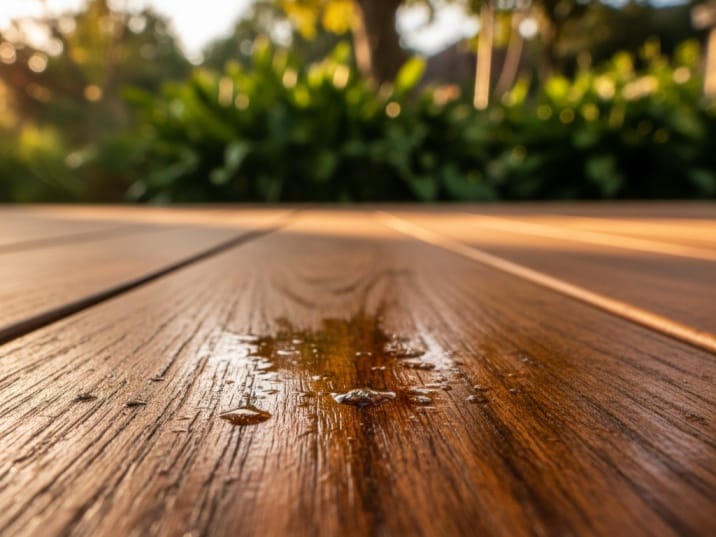
When deciding to stain and seal wood deck surfaces, you also have to choose whether it should be oil or water.
- Oil-Based Stains: These penetrate deep into the wood, nourishing the fibers. They are excellent for dense hardwoods like IPE or Redwood. However, they take longer to dry (up to 48 hours) and require mineral spirits for cleanup. They tend to fade gradually rather than peel.
- Water-Based (Acrylic) Stains: These form a breathable film on top of the wood. They dry incredibly fast (1–4 hours) and clean up with soap and water. They hold color longer but can peel if not applied correctly.
Deck Stain vs Sealer: The Decision Matrix
Still stuck? Here is a breakdown to help you decide if you should stain or seal deck surfaces at your home.
Feature |
Deck Sealer |
Deck Stain |
|---|---|---|
Appearance | Clear / Turns Gray | Tinted / Keeps Color |
Protection | Moisture Only | Moisture + UV Rays |
Lifespan | 1 Year | 2–5 Years |
Best For | Wood purists, Cedar (if graying is desired) | Redwood, older decks, sun-exposed decks |
Can I Stain and Seal Wood Deck Surfaces at the Same Time?
This is a common Google search: “stain and seal deck.” The good news is that you usually don’t have to buy two separate products.
Most professional-grade stains act as both a stain vs sealant. They penetrate the wood to color it and contain waterproofing agents to seal it. You rarely need to apply a clear sealer over a fresh stain; in fact, doing so can sometimes cause peeling because the sealer can’t penetrate the already-stained wood.
However, the term “staining and sealing a deck” often refers to the process of protecting the wood, regardless of whether you use a 2-in-1 product or a distinct system.
The "Water Drop Test": When is it Time?
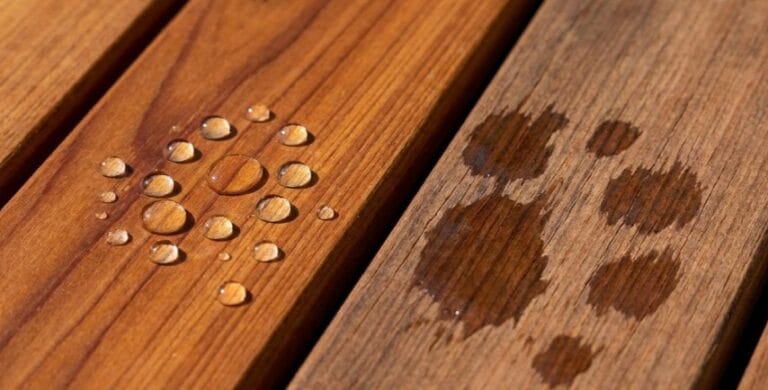
Not sure if your existing wood sealant vs stain is still working? Perform the simple “Water Drop Test.”
Sprinkle a few drops of water on several different areas of your deck (high traffic and low traffic).
- If the water beads up: Your current protection is active. You don’t need to do anything yet.
- If the water soaks in immediately: The wood is thirsty and unprotected. It is time to stain or seal deck boards immediately to prevent rot.
How to Choose: Stain a Deck or Paint?
Sometimes the question isn’t just stain vs seal, but whether to paint. Paint sits on top of the wood (film-forming), while wood sealant vs stain typically penetrates. We generally recommend staining over painting for horizontal surfaces (floorboards) because paint tends to peel and trap moisture, leading to rot. Stains fade gradually, making them easier to maintain.
If you choose a synthetic alternative instead of wood, learning how to clean composite decking with the right products is vital to prevent mold buildup.
The Bottom Line
Here’s what you should analyze before deciding whether to stain or seal your deck:
Choose Stain if you want to protect your investment from the sun, keep the rich color of the wood, and do maintenance less often. For expensive woods like Redwood, a semi-transparent stain is the absolute best way to honor the material.
Choose Sealer only if you strictly want a gray, weathered look but want to stop water rot, or if you are protecting a very temporary structure.
Ultimately, deck staining and sealing are about extending the life of your home’s exterior. Whether you choose deck stain or paint, or a clear sealer, the most important step is simply doing it. Neglected wood is a magnet for dry rot and termites.
Need help restoring your deck?
Don’t spend your weekend wrestling with pressure washers and sanders. Trust the local experts. Contact Sidex, your premier siding and deck contractors, for a free consultation today. Let’s bring your deck back to life.